Hugh Grant on Heretic Dark Roles Faith and Reinventing His Career Slug
In Heretic, a psychological thriller from A24, Hugh Grant steps into one of the most unsettling roles of his career. Gone is the familiar charm of romantic come...

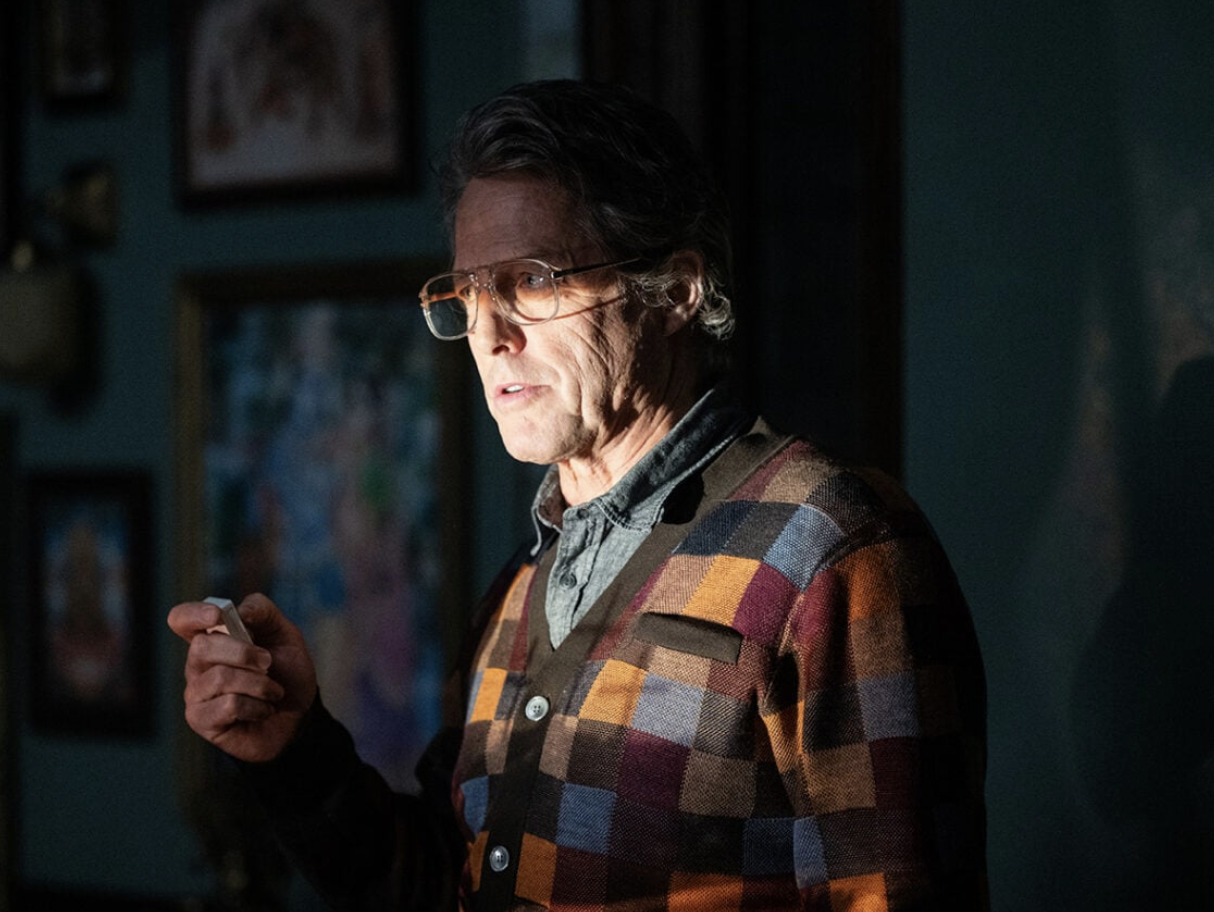
In Heretic, a psychological thriller from A24, Hugh Grant steps into one of the most unsettling roles of his career. Gone is the familiar charm of romantic comedies — in its place, a character that is intellectual, manipulative, and quietly dangerous.
The film follows two young missionaries trapped in the home of a reclusive man who turns their faith into a psychological experiment. Grant’s Mr. Reed doesn’t rely on violence alone — he dissects belief itself, using theology, logic, and discomfort as weapons.
We spoke with Grant about this shift toward darker characters, the role of religion in horror, and why he finds comfort in complexity.
On Playing Darkness — and Finding Humor Inside It
For Grant, the move into darker territory wasn’t a rejection of comedy — it was an evolution of it.
Mr. Reed, he explains, still sees himself as amusing. A former academic figure, someone who likely once performed for students, Reed carries a distorted sense of wit. The unsettling effect comes precisely from that contrast — the more he tries to appear playful, the more disturbing he becomes.
It’s a performance built on tension: humor not as relief, but as a mask for something far less stable.
Why Villains Are More Interesting Than Heroes
Grant doesn’t approach antagonists as “evil” in a traditional sense. Instead, he’s drawn to the psychological layers beneath them.
What interests him most is how people reshape themselves in response to pain — how trauma, defense mechanisms, and internal contradictions create something unexpected, even disturbing.
Playing characters like Reed becomes less about embodying cruelty and more about peeling back those layers — getting closer to what he describes as the emotional core beneath the surface.
That complexity, he suggests, is where the real work begins.
The Challenge of Holding Attention
One of the most demanding aspects of Heretic wasn’t physical or emotional — it was structural.
The script included long, lecture-like monologues, far removed from the rhythm of conventional film dialogue. Instead of quick exchanges, Reed delivers extended arguments, philosophical provocations, and theological breakdowns.
For an actor, that creates a different kind of challenge: not just performing, but sustaining attention.
How do you hold an audience when the scene itself resists traditional pacing?
That question, more than anything else, defined the role.
Religion, Horror, and Why Faith Feels Unsettling
Grant sees a natural connection between religion and horror — one that cinema has explored for decades.
Religious symbols, especially within Christianity, carry a dual power: they comfort and disturb at the same time. Churches can feel safe, but also eerie. Faith can reassure, but also provoke fear.
Heretic leans into that ambiguity.
The decision to center the story around missionaries reflects that tension. Their role is to spread belief — but in the film, belief becomes something to be tested, challenged, and ultimately destabilized.
For Grant, the appeal wasn’t controversy, but curiosity. Religion, he suggests, remains one of the few subjects that can still provoke genuine unease.
Personal Belief — Between Skepticism and Need
Grant’s own relationship with religion is complicated.
Raised in a religious environment, he eventually rejected it in his youth. But he admits that, over time, the certainty of disbelief softens.
In difficult moments, he finds himself drawn back — not necessarily to doctrine, but to the idea of comfort.
There’s something human, even irrational, about wanting to believe that something — or someone — might help.
And perhaps that contradiction is what makes Heretic resonate beyond its genre.
On Career Reinvention and Escaping Typecasting
For much of his career, Grant was associated with a very specific image — the charming, slightly awkward romantic lead.
It worked, but it wasn’t entirely accurate.
He describes that phase as limiting, even if it included projects he genuinely values. The real satisfaction, he says, comes from transformation — from playing characters that feel distant, unfamiliar, even uncomfortable.
The shift toward darker, more complex roles wasn’t a calculated reinvention. It was a return to something more natural: experimentation, unpredictability, and creative risk.
Why Studios Like A24 Matter
Grant is particularly vocal about the importance of studios like A24.
In an industry often driven by scale and predictability, A24 represents something different — a willingness to embrace unusual ideas, tonal ambiguity, and creative freedom.
That approach doesn’t just produce distinctive films. It attracts new audiences — viewers looking for something less conventional, more challenging, and less formulaic.
In a landscape where traditional cinema attendance has been declining, that kind of originality becomes not just valuable, but necessary.
What Comes Next
Grant makes it clear that he has no fixed plan — no checklist of genres or roles to conquer.
But he’s enjoying this phase of his career. The darker, more layered characters. The unpredictability. The freedom to move away from expectations.
If anything, Heretic feels less like a departure and more like a continuation — a sign that he’s finally working in a space that allows for contradiction, nuance, and risk.
Final Note
This is not just an interview about a film.
It’s about an actor stepping away from certainty — and finding something far more interesting in the process.