Peacock Expands the Fast & Furious Universe with New Television Series as the Franchise Moves Toward Its Final Chapter
The Fast & Furious franchise is entering a new phase of expansion as NBCUniversal’s streaming platform Peacock develops a television series based on the glo...

The Fast & Furious franchise is entering a new phase of expansion as NBCUniversal’s streaming platform Peacock develops a television series based on the globally successful action saga. The announcement, made publicly by franchise star Vin Diesel, signals a significant step in the evolution of one of Hollywood’s most commercially powerful intellectual properties, which has grown far beyond its origins as a street racing film into a multi-layered cinematic universe.
According to Diesel, who will also serve as an executive producer on the upcoming projects, the studio is currently developing multiple television extensions of the Fast & Furious world. In total, four separate shows are reportedly in various stages of development, each expected to explore different corners of the franchise mythology. While specific plot details remain tightly controlled, the expansion reflects a broader strategy to sustain audience engagement across streaming platforms as the main film series approaches its conclusion.
The writing team attached to the first confirmed project includes Mike Daniels and Wolfe Coleman, known for their work on Shades of Blue, a crime drama that explored moral ambiguity within law enforcement structures. Their involvement suggests that the Fast & Furious television adaptation may lean into character-driven storytelling while still preserving the franchise’s signature emphasis on action, loyalty, and high-stakes conflict.
From Street Racing Story to Global Entertainment Empire
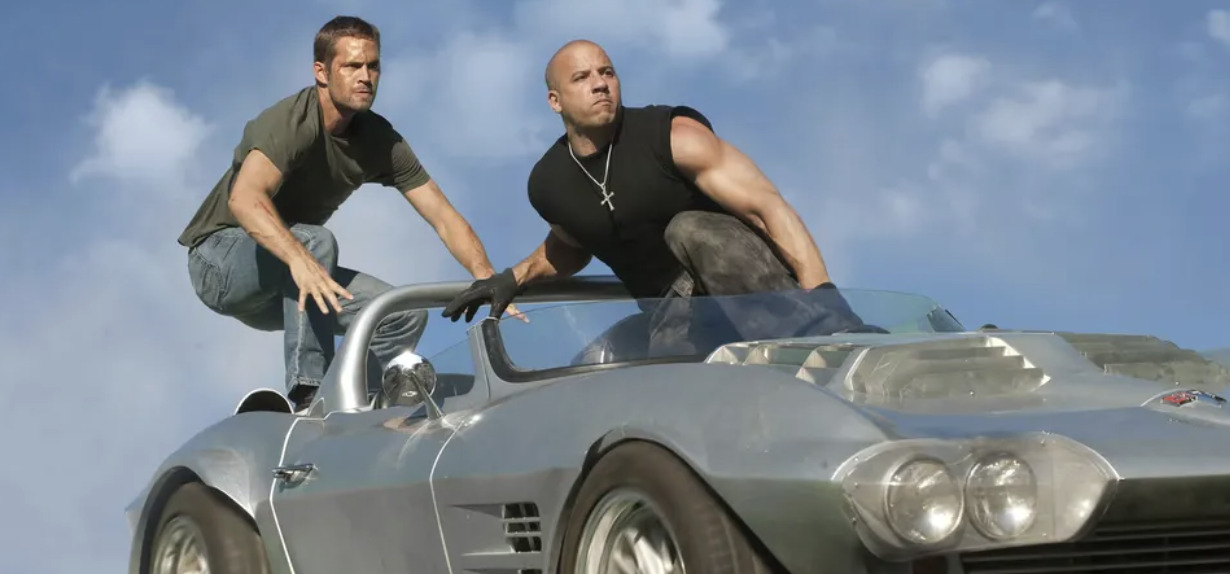
The original Fast & Furious film debuted in 2001 and was initially centered on underground street racing culture in Los Angeles. It introduced audiences to Dominic Toretto, played by Vin Diesel, and Brian O’Conner, portrayed by the late Paul Walker. What began as a relatively contained story about illegal racing and criminal investigation gradually evolved into a sprawling global franchise involving international heists, espionage-level missions, and large-scale action set pieces.
Over time, the series shifted its identity from street-level realism to a stylized action universe defined by gravity-defying stunts, ensemble cast dynamics, and increasingly ambitious narrative scope. This transformation allowed the franchise to expand its audience far beyond car enthusiasts and position itself as one of the most reliable global box office performers in modern cinema.
Across ten main installments, the franchise has collectively earned more than 7 billion dollars worldwide, making it one of the highest-grossing film series in history. Its commercial success has been driven by consistent international appeal, particularly in markets outside the United States, where its themes of family, loyalty, and high-energy action resonate strongly.
The Role of Streaming in Franchise Expansion
The decision to bring Fast & Furious into the television space through Peacock reflects a wider industry trend in which major film franchises are extended into serialized streaming content. Rather than relying solely on theatrical releases, studios are increasingly building interconnected ecosystems that allow characters and storylines to develop across multiple formats.
For Peacock, the Fast & Furious series represents a major opportunity to strengthen its position in the competitive streaming landscape. While the platform has built its identity around a mix of original programming and access to NBCUniversal content, high-profile franchise expansions are seen as a key strategy for attracting and retaining subscribers.
The introduction of four separate shows indicates that the studio is not approaching this as a single spin-off, but rather as a coordinated universe expansion. This structure suggests the possibility of interconnected narratives, potentially echoing the cinematic universe model that has defined other major entertainment properties over the past decade.
Vin Diesel’s Expanding Creative Control
Vin Diesel’s involvement as executive producer further reinforces the continuity between the films and the new television projects. Over the years, Diesel has become one of the central creative figures in shaping the tone and direction of the Fast & Furious franchise. His emphasis on themes of family, loyalty, and legacy has become a defining feature of the series, influencing both narrative structure and character development.
By taking a production role in the television adaptation, Diesel ensures that the core identity of the franchise remains consistent across formats. This continuity is particularly important as the series transitions into its final cinematic phase, with the eleventh main film currently scheduled for release in 2028.
A Franchise Approaching Its Final Chapter
The announcement of the television expansion comes at a pivotal moment for the Fast & Furious saga. After more than two decades of continuous growth, the main film series is approaching its planned conclusion. The eleventh installment is expected to serve as the final chapter in the core narrative arc that began in 2001.
However, rather than signaling an end to the franchise, the development of television content suggests a strategic repositioning. Instead of concluding the universe entirely, the intellectual property is being reshaped into a long-term transmedia ecosystem, where the story continues in parallel formats.
This approach reflects a broader shift in entertainment economics, where established franchises are no longer treated as finite series but as evolving platforms. In this model, the end of one narrative thread becomes the beginning of another, allowing studios to maintain audience engagement over extended periods without relying solely on theatrical cycles.
Writing and Narrative Direction
The involvement of Mike Daniels and Wolfe Coleman adds an additional layer of interest to the project. Both writers have experience working on serialized storytelling that blends action with character psychology. Shades of Blue, in particular, was known for its exploration of moral complexity within high-pressure environments, a tone that could translate effectively into a Fast & Furious spin-off focused on the emotional and ethical dimensions of its characters.
While the franchise is widely recognized for its action sequences, its enduring popularity has always been rooted in its character relationships. The concept of family, both biological and chosen, remains central to the narrative identity of the series. A television format provides more space to explore these dynamics in greater depth, potentially offering a more grounded complement to the large-scale cinematic spectacles.
The Future of the Fast & Furious Universe
As Hollywood continues to evolve toward interconnected storytelling models, the Fast & Furious franchise stands as a key example of how traditional film properties are being adapted for the streaming era. The transition from standalone films to a multi-platform universe reflects not only changing audience habits but also the economic realities of modern content production.
Peacock’s investment in expanding the franchise into television signals confidence in its long-term cultural relevance. With billions in global revenue, a deeply established fan base, and a mythology that spans more than twenty years, the Fast & Furious brand remains one of the most valuable assets in contemporary entertainment.
As the franchise moves toward its final cinematic installment in 2028, the development of multiple television series ensures that its universe will continue to evolve. Rather than concluding, Fast & Furious is entering a new phase of narrative expansion, one that shifts the focus from closure to continuity, and from film to a broader storytelling ecosystem that spans platforms, formats, and audiences worldwide.