Summer 2026 Box Office Is Already the Most Unpredictable in a Decade — Here Is Why That Is Good News
The summer box office of 2026 is shaping up to be the most genuinely uncertain in recent memory, and if you pay attention to where Hollywood's money is going a...

The summer box office of 2026 is shaping up to be the most genuinely uncertain in recent memory, and if you pay attention to where Hollywood's money is going and why, that uncertainty is the most encouraging sign the film industry has produced in years.
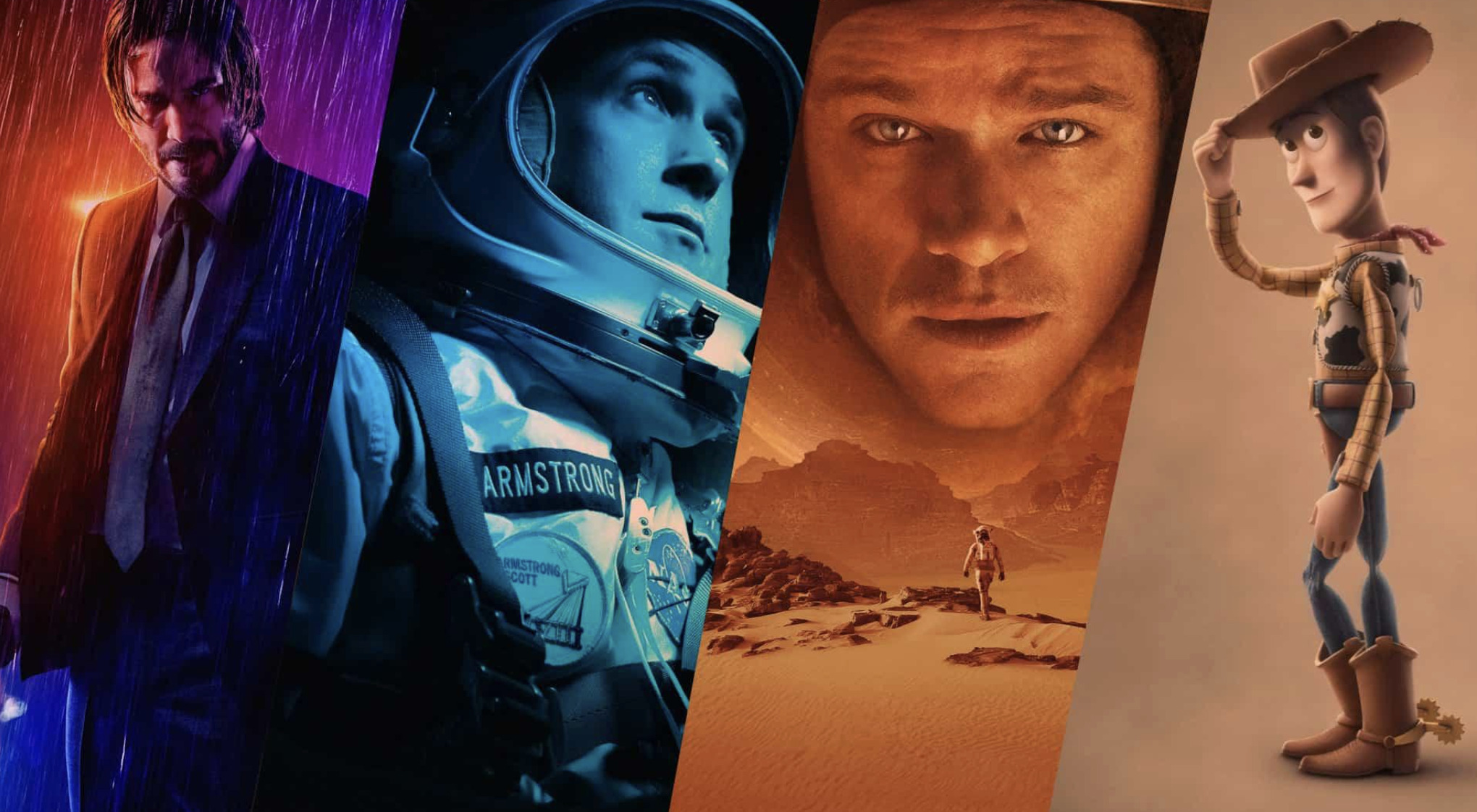
Consider what Q1 2026 already established. Project Hail Mary — Andy Weir's Mars survival story adapted by Amazon MGM, without a single recognisable franchise property attached — grossed $305.4 million domestic and $613.4 million globally before the end of April. The Super Mario Galaxy Movie, a sequel to 2023's blockbuster, added $386.4 million domestic and $831.4 million globally. Scream 7 opened to $63.6 million domestically. Hoppers, a Pixar original with no prior IP, brought in $164.1 million domestic by late April.
What those four films have in common is that they represent four completely different entertainment propositions — a serious sci-fi drama for adults, an animated family sequel, a legacy horror franchise, and an original Pixar property — all performing at different but substantial levels. The Q1 landscape was not dominated by a single mega-franchise. It was won by diverse product.
What Summer Looks Like From Here
The summer 2026 release calendar has at least four films that could, individually, be the defining cinematic event of the season. That they are all competing in adjacent release windows makes the scheduling one of the most aggressive the industry has seen.
The Mandalorian and Grogu arrives as the first feature film continuation of the series that became the most-watched show in Disney+ history. The pressure on it is enormous — not because the characters are unloved, but because the story of how the beloved TV episodes translated to theatrical scale will be studied for years. If it works, it signals that serialised streaming storytelling can migrate to cinemas without losing its audience. If it doesn't, it raises uncomfortable questions about whether Disney's Star Wars theatrical ambitions have a ceiling.
Mortal Kombat II moved from October 2025 to May 2026 after strong early trailer reception, a decision that signals confidence from Warner Bros. The addition of Karl Urban as Johnny Cage — a fan-favourite character conspicuously absent from the first film — has driven the kind of pre-release buzz that the original never generated. Urban brings a specific quality to action roles: the ability to play characters who are simultaneously competent and ridiculous, which is the exact register Johnny Cage requires.
The Devil Wears Prada 2, twenty years after the original, reunites Meryl Streep as Miranda Priestly with the world of Runway magazine. The sequel is set in a changing media landscape, which is a clever structural choice: it allows the film to comment on its own cultural moment without betraying the original's specificity. Streep at this point in her career choosing to return to a role rather than a franchise is itself a statement.
And then there is Christopher Nolan's The Odyssey, arriving July 17. Everything about that film is covered in its own dedicated analysis. What matters in this context is that it occupies the same summer as the Disney and Warner Bros. tentpoles and refuses, entirely, to compete on their terms.
The Signal in the Noise
The most important thing happening in summer 2026 cinema is not any single film. It is the apparent end of a period in which the theatrical experience was dominated by a handful of interconnected cinematic universes, and the apparent beginning of something more diverse and, arguably, more interesting.
The MCU is present but not dominant. The DCEU has been restructured. The Avatar sequels are proceeding but not rushing. In their place, the studios are betting on a wider range of propositions: a Nolan epic, a video game adaptation, a legacy sequel, a franchise continuation. None of them are sure things. All of them are interesting.
Interesting is underrated as a quality in blockbuster cinema. The years when every summer was dominated by films you could predict the broad outlines of before their trailers dropped were commercially successful and culturally stagnant. The summer of 2026 is not that. It is a summer of genuine questions, and the answers — whatever they turn out to be — will tell us something real about what audiences in 2026 actually want from the theatrical experience.
That is worth being curious about.