Why the Limited Series Became Television's Most Prestigious Form
Somewhere in the last decade, the most coveted real estate in television stopped being the long-running flagship drama and became something smaller and stranger...

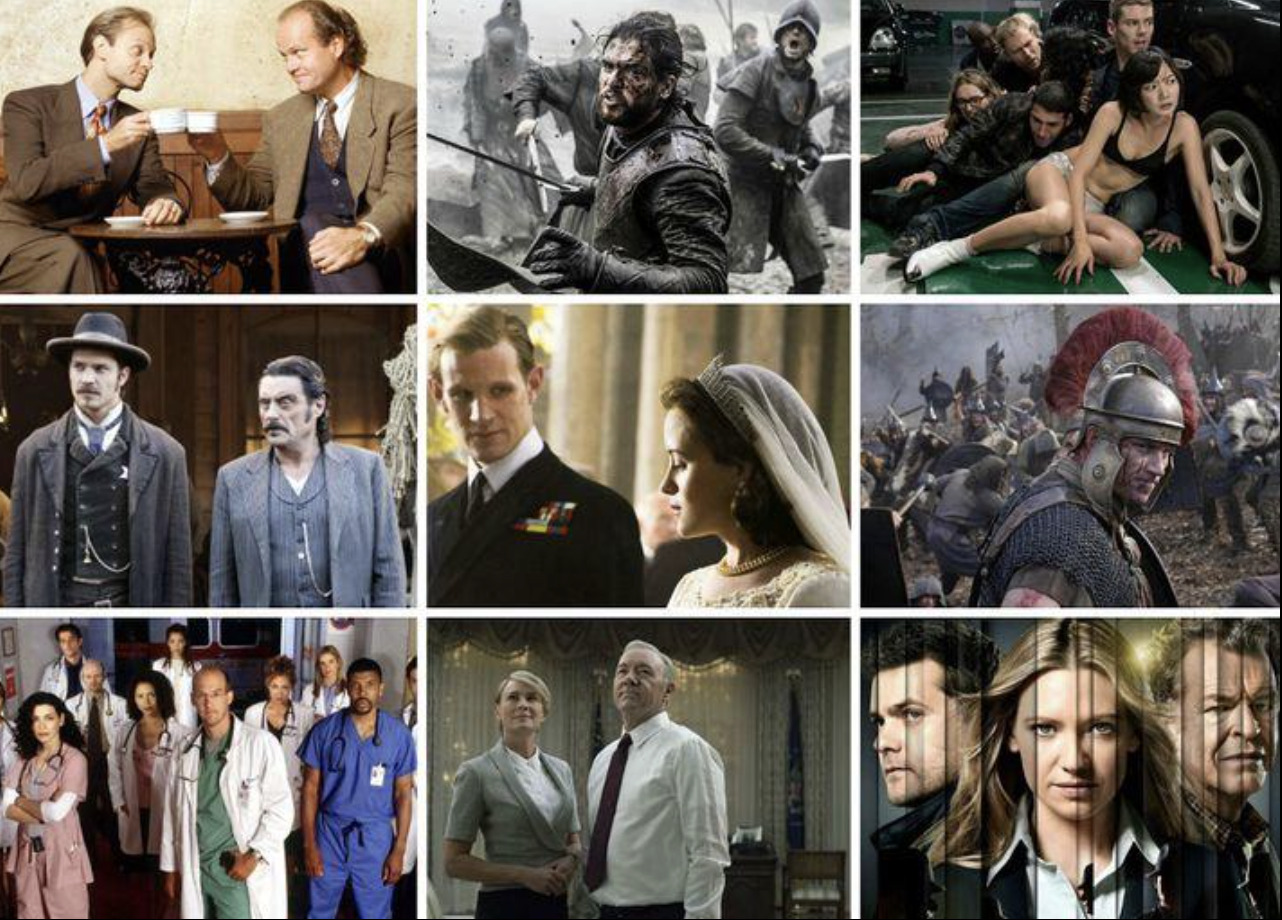
Somewhere in the last decade, the most coveted real estate in television stopped being the long-running flagship drama and became something smaller and stranger: the limited series. The self-contained story told across a handful of episodes, beginning and ending on its own terms, has gone from a poor relation of the proper TV show to the form that attracts the biggest film stars, the most ambitious directors, and the most serious critical attention. To understand why is to understand something about what audiences actually want from a story, and about the peculiar promise the limited series makes that almost nothing else on television will.

The form that always ends
Begin with the obvious thing, because it is the most important thing. A limited series is, by definition, complete. It has an ending built into its conception, and that single fact changes everything about how it can be made and how it is experienced. A traditional series is engineered to continue — to defer resolution, stretch arcs, and protect the possibility of another season, because its commercial logic depends on going on. A limited series is engineered to conclude. It can build toward a real ending because it knows it has one, which means it can be shaped with the deliberateness of a novel or a film rather than the open-ended sprawl of an ongoing show.
For the writer, this is liberation
A story that knows its own length can be paced, weighted, and resolved properly, without the padding that bloats a hit series desperate to justify a fifth or sixth season. For the audience, it is a promise of trust: invest in this, and it will pay you off, not leave you stranded when it is cancelled mid-arc or dragged out until it curdles. In an era when so many beloved shows overstay their welcome or vanish unfinished, the guarantee of a satisfying conclusion has become genuinely precious.
The limited series also solved a problem for cinema's biggest talent. Film stars and prestige directors who would once have considered television a step down found in the limited series something that felt like a film — a finite, authored project with a beginning, middle, and end — but with room a two-hour movie does not have. Six or eight hours allows a depth of character and a patience of storytelling that the feature format simply cannot accommodate, while the bounded commitment means no one is signing away years of their life to an open-ended contract. The result was a migration. The kind of mid-budget, character-driven adult drama that has grown scarce in cinemas found a new home in the limited series, often with the very stars who would once have headlined it on the big screen. The form became a refuge for exactly the serious, grown-up storytelling that the rest of the industry had squeezed out, and the prestige followed the talent. When the best people in the business want to work in a form, that form acquires authority.he talent. When the best people in the business want to work in a form, that form acquires authority.
The economics that made it bloom
None of this would have happened without the streaming model that rewarded it. A limited series is an ideal object for a subscription platform: a complete, bingeable event that can drive a wave of subscriptions and conversation in a concentrated burst, then live on in the library as a finished, recommendable whole. It does not require the years-long audience commitment of a flagship drama, and it carries less risk — a self-contained story that underperforms is a single bet, not an ongoing liability.
It also functions as a magnet for attention in a crowded landscape. A limited series with a film star and a striking premise is an event, and events are what break through the noise of infinite content. For platforms competing for both subscribers and prestige, the limited series offered a way to buy cultural credibility and a viewing spike in a single, contained package. The form's artistic appeal and its commercial logic pointed, for once, in the same direction.
The contradiction at its heart
There is, inevitably, a tension, and it is a revealing one. The limited series is prized precisely because it ends — and yet the moment one becomes a hit, the pressure to continue it becomes almost irresistible. A story conceived as complete suddenly sprouts a second season, and the very quality that made it special, its finitude, is sacrificed to its success. We have watched it happen repeatedly: a perfect, self-contained season followed by an unnecessary continuation that dilutes what made the original work.
This contradiction exposes what audiences were really responding to. They did not love these stories because they were short; they loved them because they were whole. When a "limited" series returns out of commercial appetite rather than narrative need, it breaks the implicit contract that made the form trustworthy in the first place. The industry's difficulty in leaving a good ending alone is, in miniature, the same difficulty that has hollowed out so much of modern television.
The quiet triumph of the complete story
The rise of the limited series is, in the end, a verdict on what storytelling is for. Against a backdrop of franchises that never conclude and shows that exist mainly to perpetuate themselves, audiences and artists alike gravitated toward the one form that still believes a story should be shaped, finished, and let go. It is television rediscovering the oldest principle of narrative: that an ending is not a failure of the story but the point of it.
That the most prestigious form on television is also the one most willing to stop says something hopeful about where taste is heading. In a culture of the endless, the complete has become the rare and valuable thing. The limited series earned its crown not by being bigger or longer but by being finished — and by trusting its audience enough to say, at the right moment, that this is where the story ends.