Conclave un film sul potere che non alza mai la voce
Edward Berger made All Quiet on the Western Front — a film about the industrialised slaughter of young men — with a restraint that many critics initially mistoo...

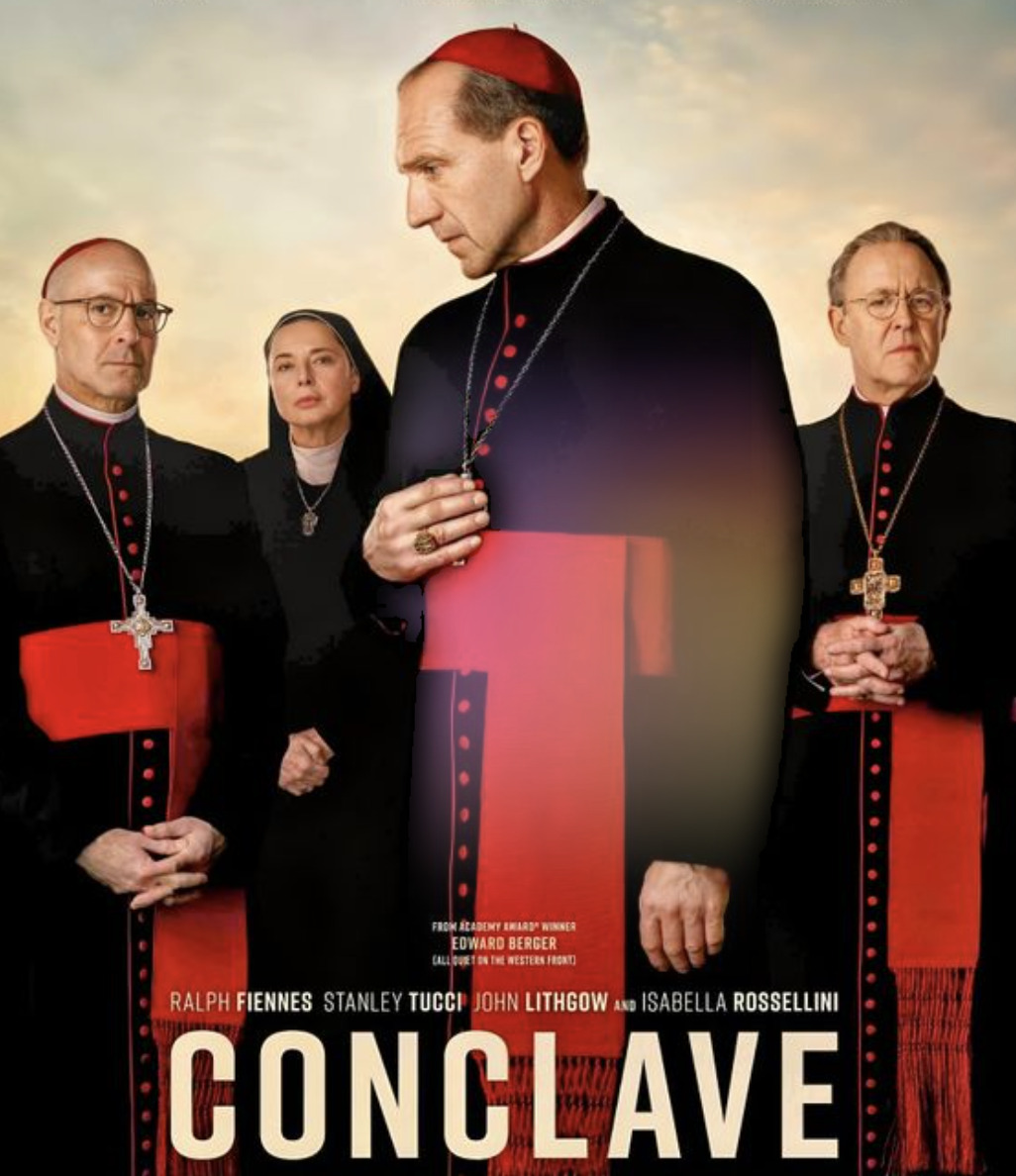
Edward Berger made All Quiet on the Western Front — a film about the industrialised slaughter of young men — with a restraint that many critics initially mistook for coldness. With Conclave, he applies the same discipline to an entirely different kind of war: the quiet, procedural, devastatingly serious contest for the papacy. The result is one of the most precisely controlled thrillers of the past several years, and one of the most underrated.
The premise is elegant in its specificity. The Pope has died. The College of Cardinals convenes in Rome, sequestered from the outside world, to elect his successor. The doors close. The phones are confiscated. And then, slowly, things begin to come apart.
The Setting as Character
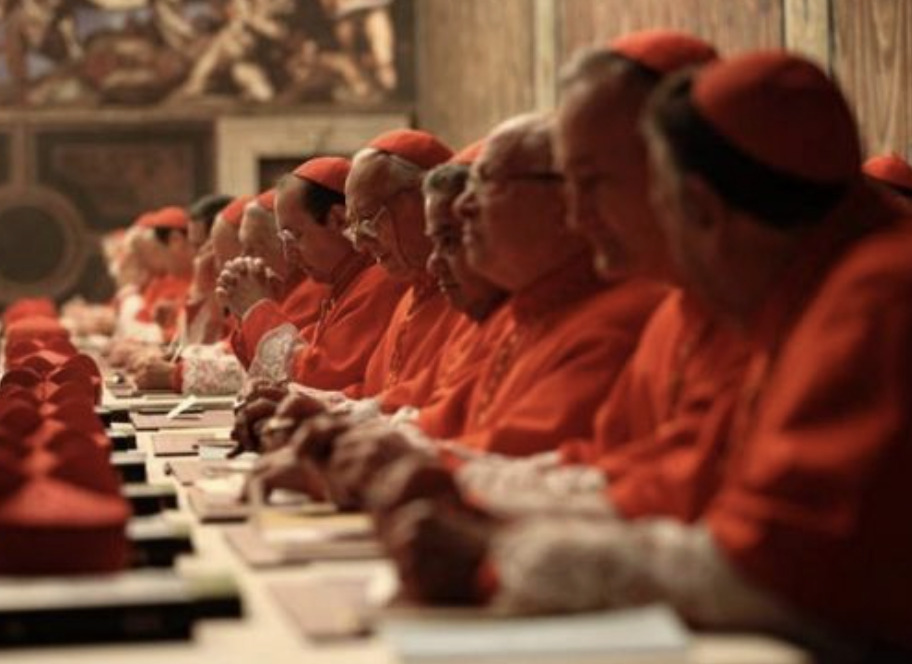
The Vatican — or rather, the Conclave's version of it — is not presented as a place of spiritual grandeur. Berger shoots it as an institution: corridors with precise power geometries, meeting rooms where alliances are tested with careful words, chapels that are simultaneously sacred and deeply political. The cinematography by Stéphane Fontaine favors cool greys and candlelight amber, a palette that refuses both romanticisation and cynicism. It looks exactly like what it is: a place where enormous decisions are made by fallible men operating within a system designed to make fallibility consequential.
This attention to institutional space is one of the film's most significant achievements. It creates the film's central tension without dialogue. Every room communicates hierarchy. Every corridor communicates surveillance. By the time the actual intrigue begins, the audience already understands the rules of the world, because the world has been shown, not explained.
Ralph Fiennes: Stillness as Performance
Cardinal Lawrence, Berger's protagonist, is a man whose fundamental decency is both his greatest strength and the specific quality that makes him dangerous in this environment. Fiennes plays him without vanity — without the knowing performance of rectitude that lesser actors would reach for. Lawrence doubts. Not merely about which candidate deserves his vote, but about faith itself, about whether the institution he has devoted his life to deserves the devotion.
These doubts are not dramatised as crisis. They surface in glances, in the slight hesitation before certain responses, in the way Lawrence's body registers discomfort when forced to act against his instincts. Fiennes has always been exceptional at conveying interior states through physical restraint. Here, in a film where overt emotion would destroy the tonal architecture, that skill becomes the engine of the entire performance.
The supporting cast — Stanley Tucci, John Lithgow, Isabella Rossellini — operate at the same register. Each character carries a different relationship to power: the reformist who wants it for good reasons, the conservative who wants it for less transparent ones, the functionary whose loyalty runs deeper than principle. None of them is drawn as a villain. Each of them, in the right circumstances, could be.
Tension Without Violence
What makes Conclave genuinely remarkable as a thriller is that nothing physically threatening ever happens. There are no weapons. Nobody runs. The danger is entirely epistemic — the danger of information, of who knows what, of what a particular secret would mean if it emerged at the wrong moment.
Berger calibrates this with extraordinary precision. He understands that the audience's anxiety needs something to attach to, and he provides it not through action but through conversation — through the specific quality of pauses between words, through the implications of things that are said obliquely rather than directly. A hand placed briefly on a shoulder. A door left slightly open. A name mentioned in passing that carries too much weight for casual mention.
The screenplay, adapted by Peter Straughan from Robert Harris's novel, makes the thematic structure clear without laboring it. The Conclave is not really about selecting a pope. It is about whether an institution built on transcendent claims can honestly reckon with its own human failures. That question — applicable to every organisation that claims higher purpose — is what gives the film's procedural mechanics their genuine weight.
The Ending: An Argument, Not a Twist
Much of the film's critical conversation has focused on its ending, which delivers a revelation that divides audiences fairly cleanly. Some find it a step too far, a moment of dramatic contrivance in a film that had earned its restraint. Others argue it is precisely the point — that the institution's capacity for surprise, for being confronted with what it did not expect and cannot easily accommodate, is exactly what the film is about.
The argument for the ending is more convincing than the argument against it. Conclave is not a mystery to be solved. It is an inquiry into what institutions do when confronted with facts they did not plan for. The revelation is not there to shock. It is there to ask whether the organisation we have spent two hours watching can do what organisations almost never do: genuinely change its understanding of itself.
Whether it can, the film wisely leaves open.
Why It Matters Now
Cinema about institutional power — about the specific way that systems designed to serve principles can become invested in their own perpetuation at the expense of those principles — is never not timely. But Conclave has arrived in a moment when trust in institutions of almost every kind is at historically low levels, and its portrait of an organisation attempting to reconcile transcendent purpose with very human failure hits with corresponding force.
Berger makes films about people trapped inside systems larger than themselves. All Quiet was about soldiers trapped inside a war. Conclave is about cardinals trapped inside a church. The systems are different. The insight is the same: that belonging to an institution shapes what a person can think, can say, can finally do — and that the cost of that shaping is rarely visible until a specific pressure makes it undeniable.
Conclave is a quiet film about loud questions. That combination is rarer than it should be, and better executed here than almost anywhere in recent memory.