Sinners: Ryan Coogler Builds a Blues Myth That Actually Bleeds
There are films that are good and films that are necessary, and occasionally — rarely, in a way that reminds you why cinema exists — a film that is both simulta...
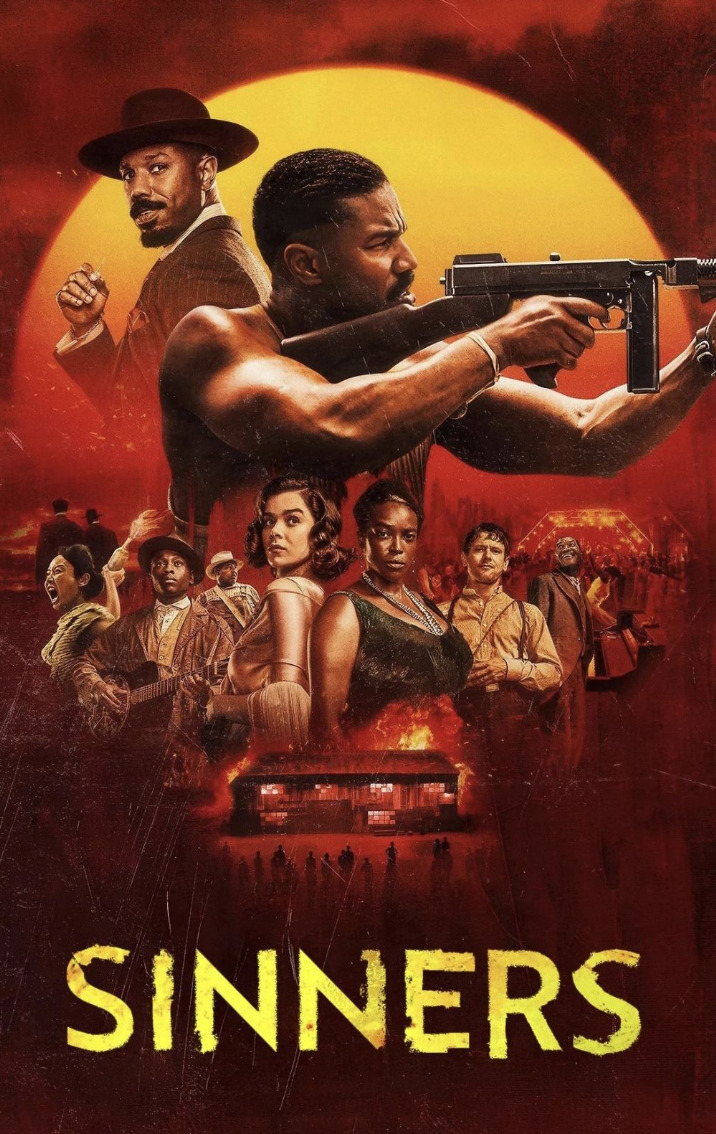
There are films that are good and films that are necessary, and occasionally — rarely, in a way that reminds you why cinema exists — a film that is both simultaneously. Ryan Coogler's Sinners is the second kind. It is the most formally ambitious American genre film in several years, and the most emotionally serious horror film since Get Out redefined what the genre could carry. It is also, underneath its mythology and its blood, a film about music — about what music costs, what it gives, and what happens when a culture tries to reclaim what was taken from it.
The setting is Mississippi, 1932. Twin brothers Smoke and Stack — both played by Michael B. Jordan, in a dual performance of such physical and psychological specificity that the fact of their being the same actor becomes quickly irrelevant — have returned from Chicago with enough money to open a juke joint in the Delta. The joint opens. The music begins. Something older than the county, older than the state, older than the country built on this ground, arrives to collect.
The Genre Architecture
Coogler works in horror the way John Ford worked in the Western — with an understanding that genre is not a limitation but a structural resource, a set of conventions that an audience already carries, which the filmmaker can either satisfy or repurpose. Sinners does both, sometimes in the same scene.
The vampire mythology the film deploys is not standard. Its creatures are not simply predators. They are something more disturbing: appropriators. They take music. They take culture. They absorb and replicate the forms of Black American expression and offer them back as seduction, as belonging, as the promise of a community that transcends the violence of the world outside the juke joint's walls. The film's central horror is not blood. It is the theft of something that was already being stolen by other means, through other systems, with more institutional legitimacy.
This is a political argument dressed in genre clothing, and it works precisely because Coogler does not pause to make it explicit. The film trusts its audience to follow the implication. The vampires are not metaphors. They are the film's actual monsters. But the architecture of what they represent is present in every scene, in every choice about what they want and how they take it.
Michael B. Jordan: Two Versions of the Same Man
The dual performance is the film's most immediately visible technical achievement, and it would be easy to focus on the mechanics — the seamless interaction between the two characters in the same frame, the physical differentiation Coogler and Jordan have built between brothers who share a face — at the expense of the performance itself.
What Jordan is doing underneath the technical accomplishment is exploring a single question through two different embodiments: what does a Black man in 1932 America owe himself, and what does he owe his community, and what happens when those debts are incompatible?
Smoke is the planner — careful, oriented toward the future, carrying the weight of a vision that the present is constantly trying to foreclose. Stack is the more instinctive twin, present-tense, drawn to the immediacy of pleasure and danger and connection. They are not opposites. They are the same person making different choices about which part of himself to lead with. Jordan holds both simultaneously in scenes where they share the frame, maintaining the distinction without caricature. It is the best work of his career.
Not Score, Not Soundtrack — Architecture
The blues in Sinners is not background. It is not atmosphere. It is the film's structural logic, the thing around which everything else — the horror, the mythology, the character dynamics — organises itself.
Coogler worked with composer Ludwig Göransson, who also scored Black Panther and the Creed films, to build a sound design that treats the blues not as period detail but as living force. The music in the juke joint is where the film's emotional temperature is highest, where the characters are most fully themselves, where the horror is simultaneously most seductive and most dangerous. It is not coincidental that this is also where the vampires are most drawn to.
The film makes an argument — not stated, but felt — that the blues is a form of survival technology. A way of processing grief and violence and dispossession that does not require the processing to end in resolution. That keeps the wound open precisely because the wound is real, and closing it prematurely would be a different kind of theft. The horror arrives not because the music is dangerous but because something external wants to take even this.
What Makes It Necessary
Sinners arrives in a moment when American cinema is doing a great deal of looking backward — at mythology, at genre, at the stories that shaped cultural identity — with a range of intentions from genuine reclamation to nostalgic comfort. Coogler's film is looking backward too, but with eyes open to what was actually there.
What was there in 1932 Mississippi is not available for comfortable mythologising. It was a specific place at a specific moment in American apartheid, and the film does not forget this for a single scene. The horror does not replace or displace the historical terror. It operates alongside it — as a way of making visible, through genre, what was already present in the world outside the genre.
This is what horror is for, when it is working at its highest capacity. Not to frighten, or not only. To make visible what daylight and decorum keep from sight.
Sinners does this with a control and a seriousness that the genre has not consistently managed for years. It is a film that earns the mythology it constructs, the grief it processes, and the audience it demands.
It is necessary. And it bleeds.