Ryan Gosling Returns to Space in the Most Human Sci-Fi Film of the Year
Modern science fiction cinema has spent years struggling to balance emotional storytelling with blockbuster scale. Some films disappear into overwhelming visual...

Modern science fiction cinema has spent years struggling to balance emotional storytelling with blockbuster scale. Some films disappear into overwhelming visual spectacle, while others become so philosophical and distant that mainstream audiences emotionally disconnect long before the final act. Project Hail Mary unexpectedly avoids both problems, becoming one of the rare large-scale Hollywood releases capable of feeling intelligent, emotionally accessible and commercially massive at the same time.
Released in March, the film rapidly transformed from a highly anticipated literary adaptation into one of the biggest global box office success stories of 2026, eventually earning $656 million worldwide. At a moment when studios increasingly rely on sequels, superheroes and nostalgia-driven franchises, the performance of Project Hail Mary immediately became one of the most discussed stories in the entertainment industry. Analysts across Hollywood began describing the film as proof that audiences still support ambitious original-feeling science fiction movies when they are anchored by strong storytelling, emotional clarity and recognizable stars.
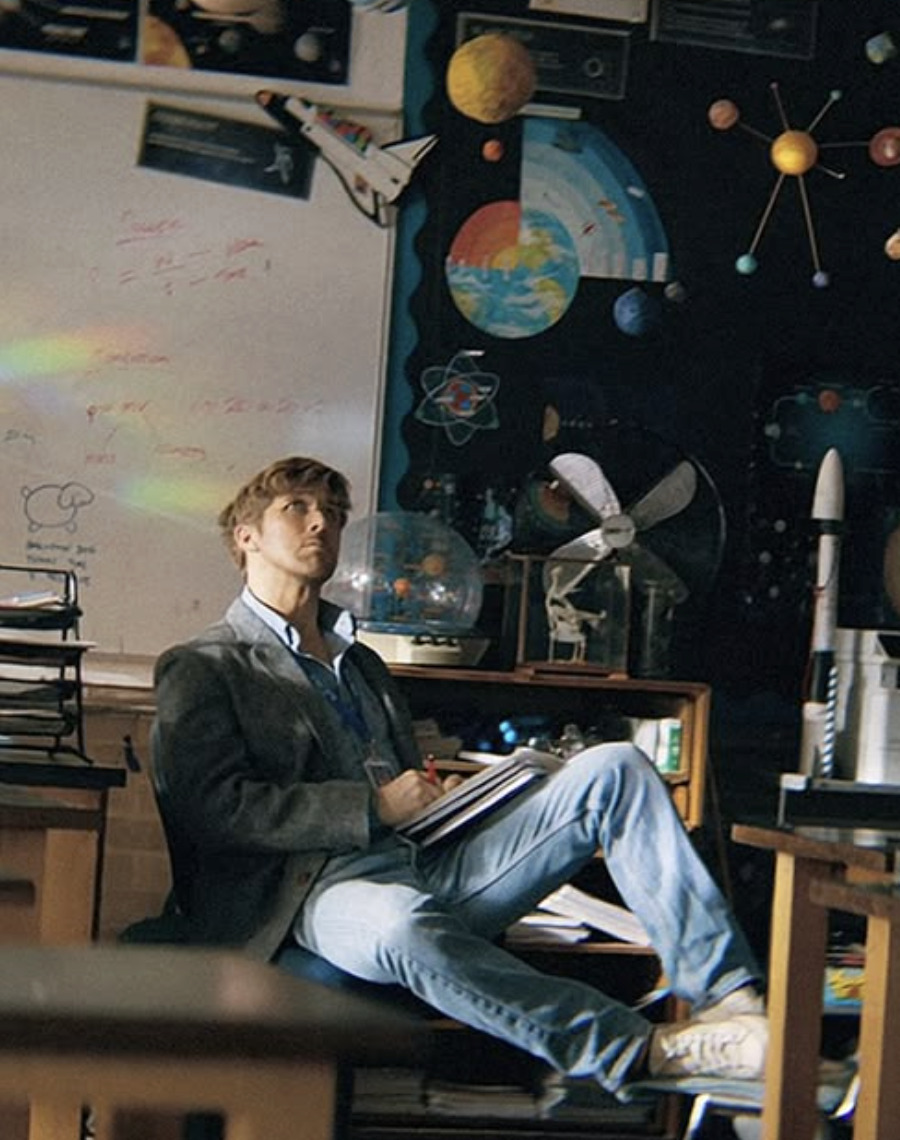
At the center of the film is Ryan Gosling, whose performance as Ryland Grace may ultimately become one of the defining roles of modern sci-fi cinema. Gosling plays a middle-school science teacher unexpectedly forced into humanity’s final survival mission after scientists discover that the Sun is slowly dying. Earth faces ecological collapse, agricultural catastrophe and eventual extinction, leaving international space agencies with only one desperate option — sending a crew into deep space in search of a solution capable of saving the planet.
The premise sounds enormous, almost impossibly large in scale, yet the film continuously grounds itself in deeply human emotions rather than abstract spectacle. Fear, loneliness, guilt, uncertainty and memory become the emotional engine of the story. Instead of portraying Ryland Grace as a conventional action hero or fearless astronaut, the screenplay emphasizes his vulnerability and confusion. He is not the “chosen savior” audiences normally expect from Hollywood science fiction. He is an ordinary man pushed into extraordinary circumstances while carrying the psychological weight of humanity’s survival.
Why the Andy Weir Adaptation Works So Well
The film is based on the bestselling novel by Andy Weir, already globally known as the author behind The Martian. That connection matters because Weir has developed a recognizable narrative style that combines real scientific reasoning with accessible emotional storytelling. Unlike many modern science-fiction writers who prioritize mythology or political allegory, Weir builds suspense through engineering problems, mathematics, biology and survival logic.
That structure translates remarkably well to cinema. Instead of relying exclusively on explosions or endless action sequences, Project Hail Mary generates tension through problem solving. Viewers become invested in calculations, experiments, failures and scientific improvisation. The screenplay trusts audiences enough to engage with complex ideas without simplifying every concept into artificial exposition. That confidence is increasingly rare inside mainstream blockbuster filmmaking.
The success of the adaptation also reflects a larger trend within Hollywood. Audiences have recently shown renewed interest in intellectually ambitious cinema, particularly after the commercial success of films like Oppenheimer and Dune. Viewers no longer automatically reject dense narratives or technically detailed storytelling. In many cases, they actively seek it out because it offers an alternative to repetitive franchise formulas dominating global box offices.
Phil Lord and Christopher Miller Deliver Their Most Mature Film
One of the biggest surprises surrounding the project was the involvement of directors Phil Lord and Christopher Miller. The duo became internationally famous through energetic comedy projects such as 21 Jump Street and animated productions known for rapid editing, layered humor and visual experimentation.
At first glance, they seemed like unconventional choices for serious hard science fiction. In practice, however, their sensibilities became one of the film’s greatest strengths. Lord and Miller understand pacing better than most contemporary blockbuster directors. They know when to accelerate tension and when to allow silence, isolation and emotional discomfort to dominate the screen. Their version of Project Hail Mary avoids becoming cold prestige science fiction obsessed only with intellectual complexity. Instead, it remains emotionally warm, curious and deeply entertaining.
Visually, the film demonstrates an unusual level of restraint for modern Hollywood. Many contemporary science-fiction blockbusters overload frames with endless digital effects, futuristic architecture and visual noise that eventually loses emotional impact. Project Hail Mary approaches space differently. The emptiness feels frightening. The spacecraft interiors feel functional rather than decorative. The visual language emphasizes realism, survival and isolation instead of turning every scene into a CGI showcase designed exclusively for trailers.
That grounded aesthetic significantly improves immersion. Space once again feels dangerous rather than glamorous.
Ryan Gosling’s Performance Carries the Entire Film
Much of the movie depends almost entirely on Ryan Gosling himself. Large sections of the story isolate Ryland Grace from humanity, forcing Gosling to sustain emotional momentum through physical acting, facial expression and psychological tension rather than constant dialogue.
It becomes one of the actor’s most layered performances precisely because he avoids heroism. Gosling understands that fear is central to the character. Grace is intelligent, but he is also terrified, exhausted and emotionally overwhelmed by the scale of responsibility placed upon him. That vulnerability makes the film far more emotionally effective than many recent blockbuster protagonists written as emotionally invincible figures incapable of genuine panic or uncertainty.
Critics repeatedly highlighted this aspect while reviewing the film. Many described Gosling’s work as a career-best dramatic performance, particularly praising his ability to balance humor, melancholy and emotional realism without breaking the story’s tension. The emotional authenticity of the character allows audiences to connect with the larger scientific narrative on a much deeper level.
The supporting cast further strengthens the film, especially Sandra Hüller, whose role adds emotional gravity and moral complexity to the story. Following her international acclaim in Anatomy of a Fall, Hüller once again demonstrates an extraordinary screen presence capable of combining intelligence, authority and emotional ambiguity simultaneously.
Box Office Success and Rotten Tomatoes Score Changed the Conversation
Commercially, Project Hail Mary quickly became one of the most important Hollywood success stories of 2026. The film’s $656 million worldwide gross dramatically exceeded many industry expectations for a non-franchise science-fiction release. Entertainment analysts began discussing whether the film could reshape studio attitudes toward large-scale original storytelling.
The movie also received exceptionally strong critical reviews, currently holding a 94% score on Rotten Tomatoes. That number became especially significant because blockbuster science-fiction films often struggle to unite mainstream audiences and critics simultaneously. Project Hail Mary managed to satisfy both groups by combining spectacle with emotional and intellectual depth.
Search traffic surrounding the film also exploded after release. Queries related to “Ryan Gosling space movie,” “Project Hail Mary ending explained,” “Andy Weir adaptation,” “best sci-fi movies of 2026” and “Project Hail Mary Rotten Tomatoes score” consistently trended across entertainment platforms during the film’s theatrical run. The movie effectively became one of the defining online discussion topics of the year within film communities, science-fiction forums and movie analysis channels.
That level of sustained cultural conversation matters because modern blockbusters often disappear from public discussion within days of release. Project Hail Mary continued generating analysis, fan theories and scientific breakdowns for weeks, partly because the film respects audience intelligence enough to leave room for interpretation and discussion.
A Rare Modern Blockbuster That Feels Human
What ultimately separates Project Hail Mary from many contemporary science-fiction films is its emotional sincerity. Hollywood has increasingly leaned toward irony, cynicism and self-aware humor as defensive mechanisms against genuine emotional vulnerability. This film does something far riskier. It allows itself to be sincere about hope, sacrifice, cooperation and survival.
The story argues that humanity survives not through violence or domination, but through curiosity, collaboration and scientific understanding. That optimistic perspective feels surprisingly refreshing within a modern cinematic landscape dominated by dystopia and institutional collapse.
For Hollywood studios, the film represents something equally important — evidence that audiences still crave intelligent blockbuster cinema capable of respecting emotional depth and narrative complexity. The commercial success of Project Hail Mary demonstrates that viewers have not abandoned ambitious storytelling. They have simply grown tired of repetitive formulas lacking emotional substance.
For Ryan Gosling, the movie further solidifies his reputation as one of the few modern stars capable of balancing artistic credibility with mainstream box office appeal. He transforms what could have been a cold scientific thriller into something deeply personal and emotionally resonant.
In the end, Project Hail Mary succeeds because it remembers what the best science fiction has always understood. Space itself is never the real subject. Humanity is.