The Devil Wears Prada 2 Is Glossy, Fun and Knows Exactly How Much It Is Not the Original
The original The Devil Wears Prada works because it is, despite its fashion-world surface, a film about something that has nothing to do with fashion. It is abo...

The original The Devil Wears Prada works because it is, despite its fashion-world surface, a film about something that has nothing to do with fashion. It is about the moment a young person discovers that the most dangerous choice an ambitious life offers is not failure but a certain kind of success — the success that requires you to become someone you did not intend to be. That question is what gives the film its edge. The clothes, the withering remarks, the logistics of impossible demands: these are the delivery mechanism for a moral problem that the film takes seriously even while appearing not to.
The Devil Wears Prada 2, directed by David Frankel from Aline Brosh McKenna's original screenplay, arrives twenty years later with a revised set of ambitions. It does not attempt to replicate its predecessor's moral architecture. What it attempts — and largely delivers — is something more modest and in its own way more honest: a reunion that acknowledges the passage of time, reconfigures the relationships among its three principal women into a new geometry, and provides the cast with enough material to remind you why you liked these characters in the first place.
Whether that is sufficient is the only real question the film invites.
What the Story Does
Miranda Priestly is navigating a failing media industry. Runway magazine — the fictional Vogue analogue she has edited with Arctic authority for decades — is losing advertising revenue, losing cultural relevance, and losing its grip on the landscape it once defined. The threat is not a person but a condition: the same condition that has hollowed out print journalism everywhere, which does not make for a satisfying antagonist and which the film struggles, intermittently, to translate into dramatic stakes that feel personal rather than structural.
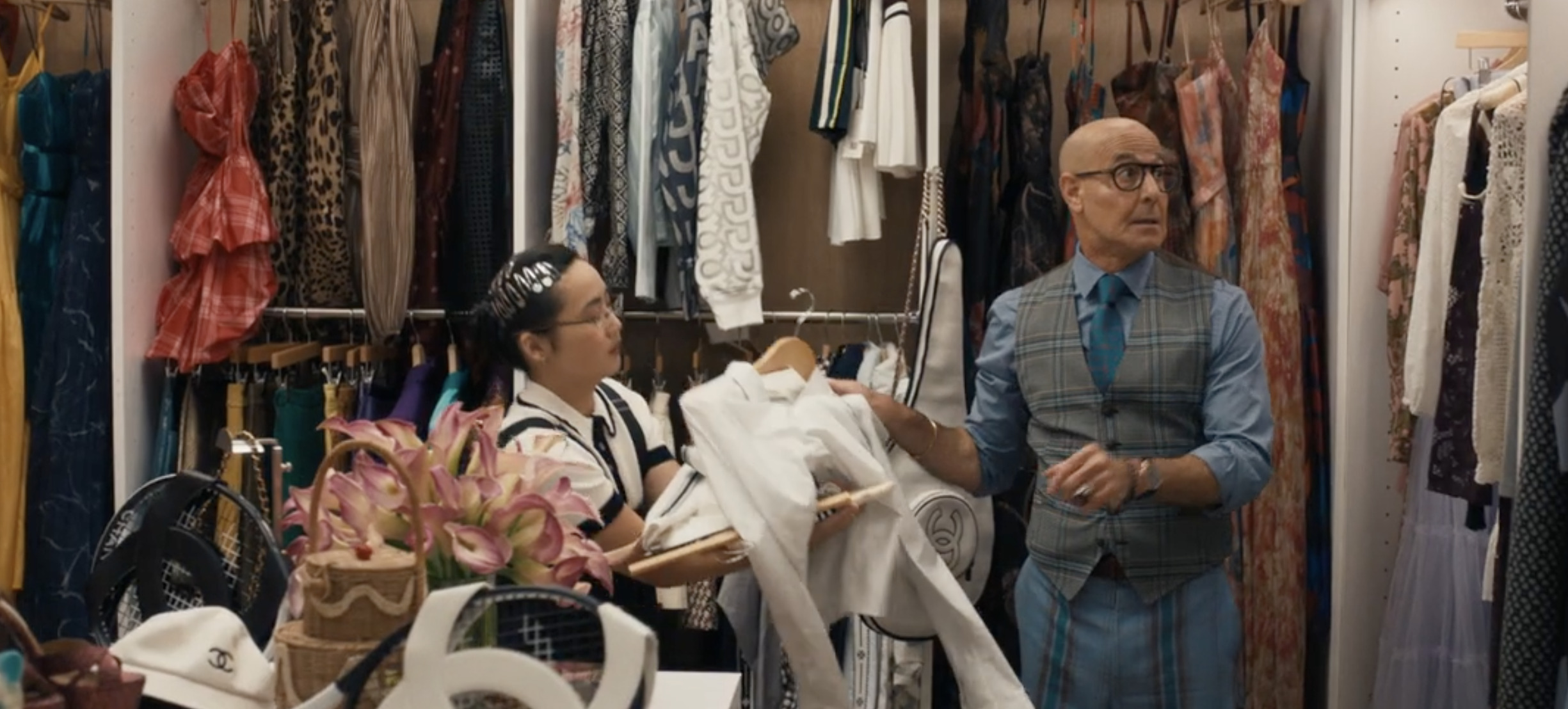
Andy Sachs returns to Runway as Features Editor — not because she wants to, but because the circumstances require it, in the way that sequels always manufacture circumstances to require reunions. She brings with her Jin Chao, her assistant, played by Helen J. Shen, who was recruited from Broadway and makes a strong impression in a role that attracted some controversy before the film's release over concerns about stereotype. The concerns were not baseless, though the performance itself is warm and grounded.
Emily Charlton — Blunt's character from the original, Miranda's devoted senior assistant elevated from function to person over the course of that film — has become the head of a luxury wellness brand whose partnership with Runway might or might not save the magazine. The question of whether Emily and Miranda, having long since left their assistant-and-superior dynamic behind, can now operate as something closer to equals is where the film finds its most interesting material. Their scenes together have a quality of negotiation — of two people who know each other through a version of themselves that no longer exists — that is more textured than anything else the screenplay offers.
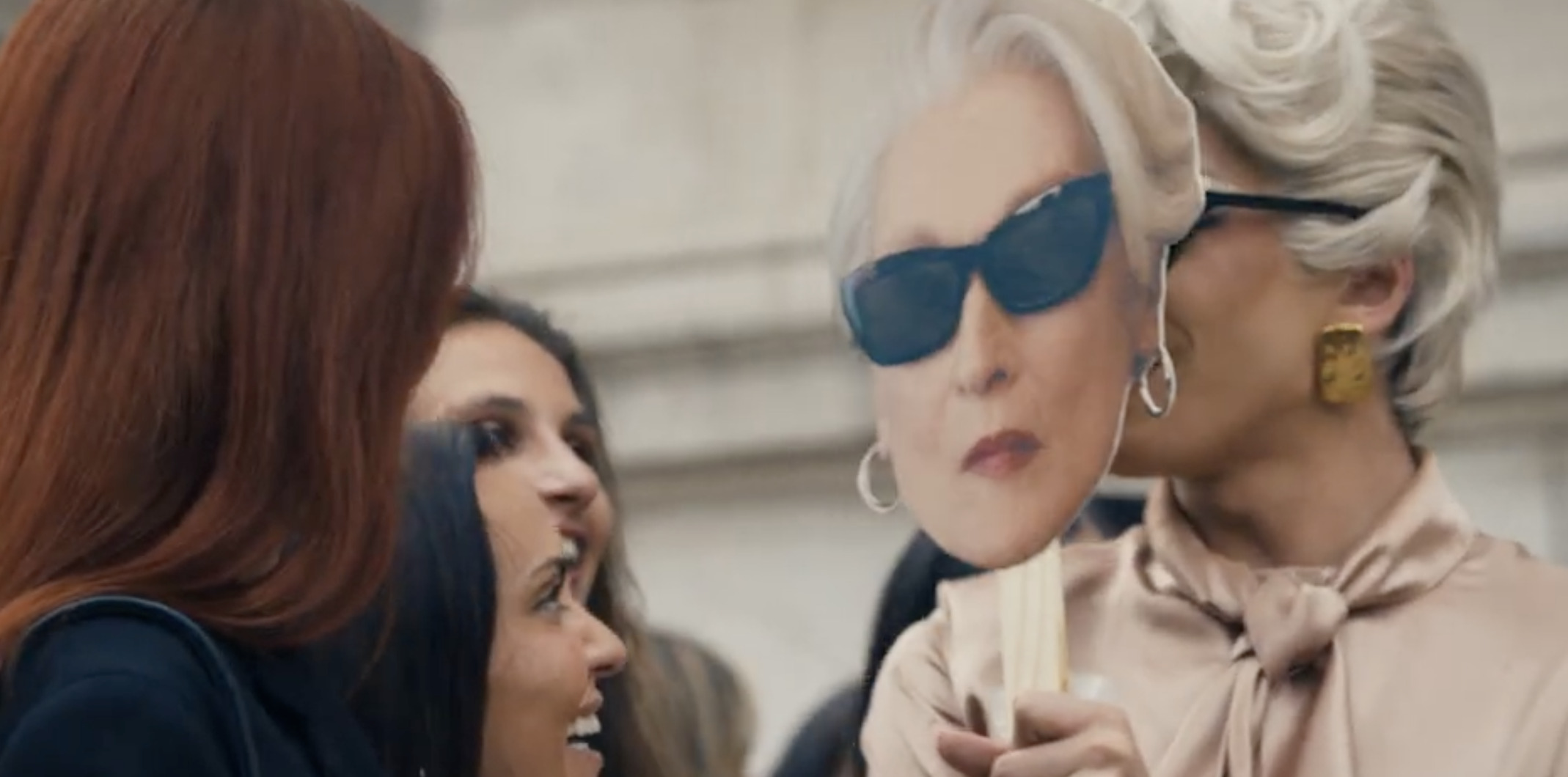
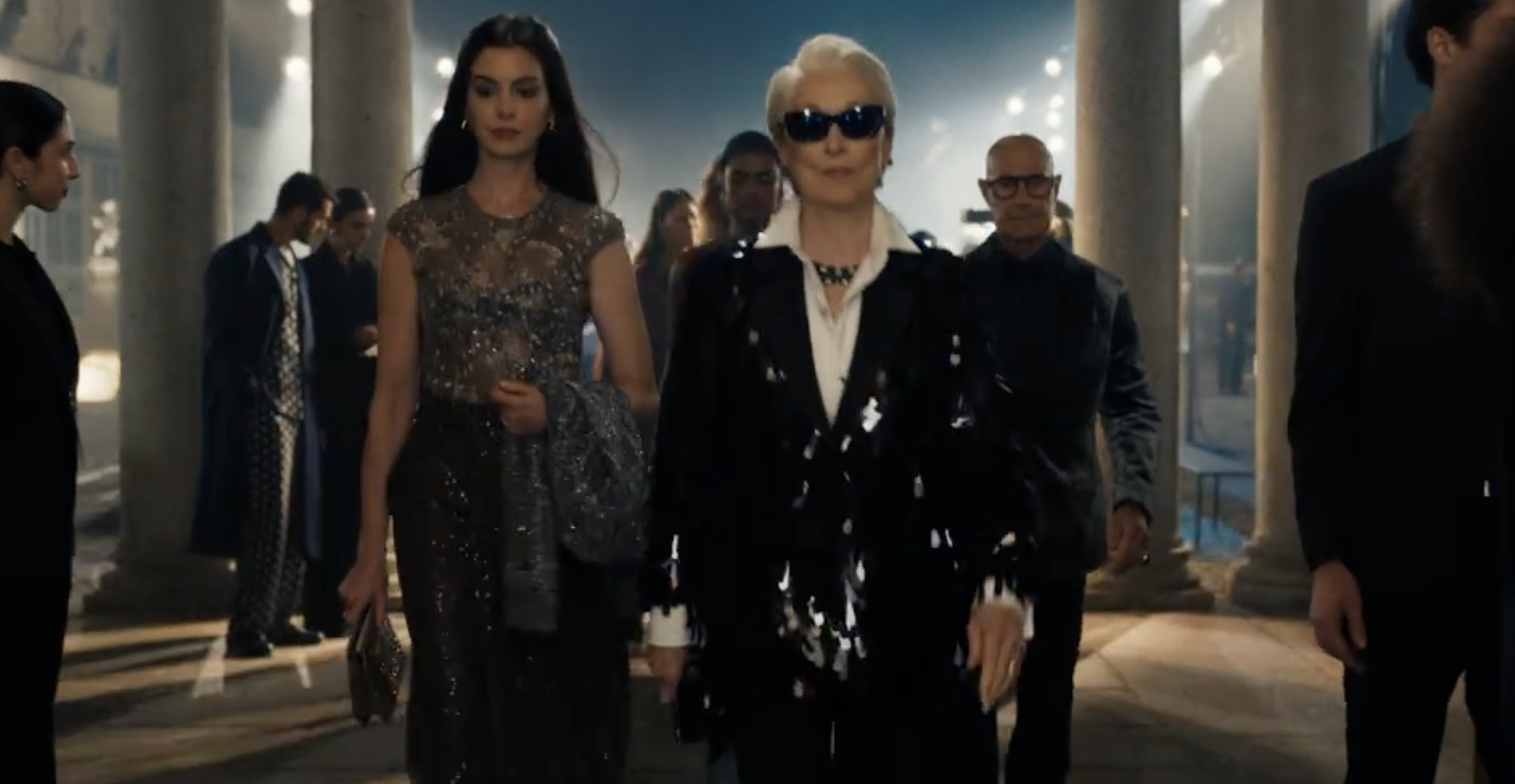
Miranda herself is facing something the original film never allowed her to face: the possibility that the world she built might not need her anymore. Streep plays this with exactly the restraint it requires. Where the original Miranda was a force of nature that the film observed with a kind of anthropological awe, this Miranda is a force of nature that has begun to observe itself — which is a different thing, more melancholy, less spectacular, and more interesting if you are willing to meet the film where it is rather than where you wish it were.
What Streep Does With What She Has
There is a scene — and it is the film's best — in which Miranda sits in a room that used to represent everything she controlled and delivers, in that signature near-whisper, a speech about what it means to have built something and then to watch it become irrelevant. Streep does not play it for sympathy and does not play it for laughs. She plays it as a woman reporting a fact, from the inside, without the comfort of distance.
It is a scene that the film does not quite earn — the screenplay around it has not done enough work to make Miranda's vulnerability feel like the culmination of anything — but Streep earns it anyway, which is the particular gift of great actors working in material that does not fully deserve them. She makes you feel that twenty years have passed inside Miranda as well as outside her, which is the minimum requirement for a sequel to justify its existence.
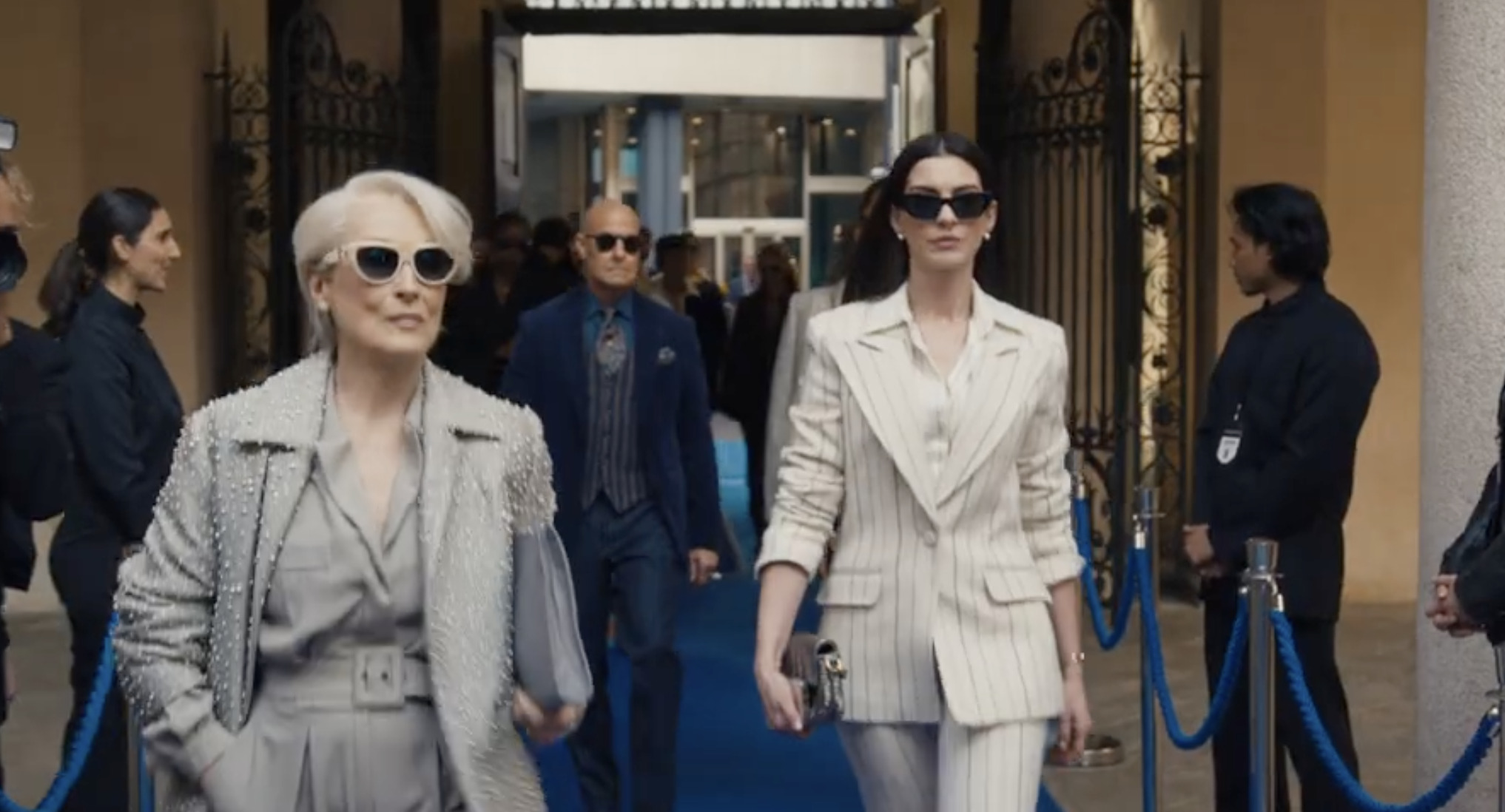
Hathaway, for her part, has grown into the role in ways that complement what the role has become. Andy at forty is not Andy at twenty-two, and the film is smart enough to let that be true rather than simply reassembling the original's dynamic with fresh set dressing. There is a tiredness to Andy's return to Runway — not the tiredness of defeat but the tiredness of competence, of someone who knows exactly what is being asked of her and does it anyway. It suits Hathaway well.
The Blunt Problem, Which Is Not Blunt's Problem
Emily Blunt is the best thing in The Devil Wears Prada 2 for the same reason she was the most interesting presence in the original: she plays a character whose relationship to the institution is more ambivalent than the film officially allows.
In the 2006 film, Emily's fierce devotion to Runway and to Miranda is played partly for comedy — the intensity of her loyalty seems both admirable and absurd — but Blunt consistently added something else, a quality of genuine belief that made the comedy land harder than it should have. Emily was not simply a type. She was a person who had made a choice about what she valued and was living in the consequence.
In the sequel, Emily is powerful, which the film treats as uncomplicated good news. She has escaped Miranda's orbit and built something of her own. This is the correct trajectory for the character and the film is right to take it. But Blunt's particular gift is for complication, for the simultaneous presence of conflicting feelings, and the screenplay largely asks her to be triumphant. She delivers the triumph with full commitment. The complication surfaces anyway, in the margins of scenes, in the way she registers Miranda's diminishment without announcing that she is registering it.
The scenes between Blunt and Streep are the film's primary argument for its own existence. They are not as good as the best scenes in the original — nothing in the sequel is as good as the cerulean speech, or as good as the Paris confrontation that crystallises Andy's moral crisis — but they are doing something real, which is more than the plot around them often manages.
The Industry Critique That Doesn't Land
The film is nominally about the collapse of print media under digital pressure, and it has enough awareness of its subject to use the right vocabulary: declining advertising revenue, algorithmic audience measurement, the replacement of editorial voice with data-driven content strategy.
What it does not have is any genuine anger about this. The original Devil Wears Prada was, beneath its frothy surface, quietly furious — about the cost of ambition, about the way institutions consume people, about the specific cruelty of systems that reward exactly the qualities they damage. The sequel identifies its villain — the changing media landscape, embodied in a Kenneth Branagh character who represents the kind of corporate logic that buys legacy titles and strips them for parts — but treats it with the same ironic distance it applies to everything else. The critique stays glossy. It never cuts.
Moira MacDonald of The Seattle Times described the film as "flat Champagne: maybe worth drinking in a pinch, but unsatisfying." The metaphor is apt. The filmmaking is polished — Florian Ballhaus's cinematography makes Manhattan and Milan look exactly as aspirational as the material requires — but polished in the way that expensive products are polished, which is to say that it mistakes the absence of imperfection for the presence of quality. The "Netflix look" controversy that surrounded the first trailer — the flat colour grading, the loss of contrast — is less apparent in the theatrical experience than the trailer suggested, but the visual language of the film is still more corporate than considered.
The Verdict
The Devil Wears Prada 2 is not a disappointment if your expectations are correctly calibrated. It is a sequel to a beloved film, arriving twenty years later, with the original cast intact and the original creative team in place. What it offers is not the original's moral energy but its pleasure — the pleasure of watching these three actresses work together, the pleasure of the fashion and the wit and the specific satisfaction of seeing Miranda Priestly inhabit a room.
The Globe and Mail's Johanna Schneller wrote that the film "has zero idea what it's about." That verdict is too harsh for what the film actually achieves, but it points toward a real limitation: the screenplay has not found a question as urgent as the original's central question, and without an urgent question, a film of this kind is dependent entirely on the quality of its performances and the goodwill of its audience.
The performances are good enough to carry the weight. The goodwill is substantial. And Streep, in that one scene, in that near-whisper, makes something happen that no amount of franchise calculation could manufacture.
That is what the film amounts to: a delivery mechanism for Meryl Streep, doing what only Meryl Streep does, in a role that twenty years of pop cultural mythology has given a weight the sequel only partially earns. It is enough to justify the running time. Whether it is enough to justify the twenty-year wait depends on what you were waiting for.