The Father (2020) — Review: The Most Terrifying Film About Dementia Ever Made, and the Best Performance of Anthony Hopkins' Career
The Quick VerdictThe Father is a masterpiece of controlled disorientation — a film that does not simply depict dementia but forces you to experience it from the...
The Quick Verdict
The Father is a masterpiece of controlled disorientation — a film that does not simply depict dementia but forces you to experience it from the inside. Anthony Hopkins gives what is almost certainly the greatest performance of his extraordinary career. Florian Zeller's directorial debut is one of the defining films of the decade.
What The Father Is About
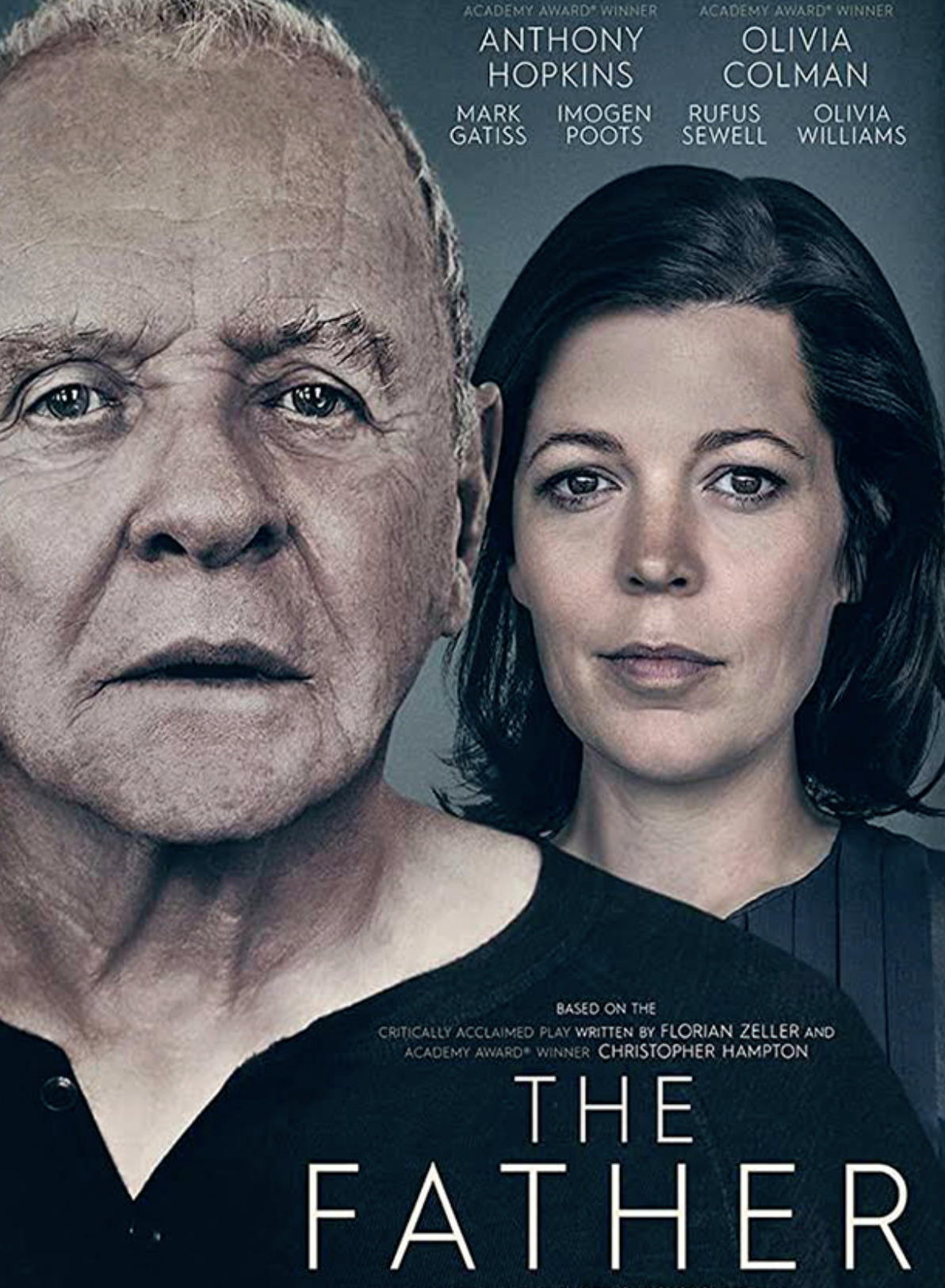
The setup sounds simple. Anthony (Anthony Hopkins) is an 83-year-old man living alone in his London flat. His daughter Anne (Olivia Colman) wants him to accept a live-in carer. He refuses. She worries. He manages — until he doesn't.
But the setup is not the film. The film is what happens to you, the viewer, when you realise that nothing you have seen in the first twenty minutes can be fully trusted. The flat changes. The people in it change. The same scene appears to replay but with different details. A man you have never seen before insists this is his home. A woman who looks almost but not quite like Anne serves dinner with cheerful indifference to your confusion.
The Father is one of a very small number of films — Memento, Mulholland Drive, in specific technical ways — that use the grammar of cinema not to tell you a story but to produce in you the cognitive state that is its subject. You are not watching a man with dementia. You are, for 97 minutes, living inside the experience of dementia. The confusion is not incidental. It is the entire project.
The Formal Achievement: How Zeller Engineered Disorientation
What Florian Zeller and editor Yorgos Lamprinos have constructed is a masterwork of deliberate, precisely calibrated disorientation that operates through four distinct mechanisms — and the sophistication lies in how subtly each one is deployed.
Spatial instability. The film is set almost entirely in one flat. But the flat is not consistent. A painting that appeared in one room is gone in the next scene. The layout changes in ways so small you cannot be certain you noticed them correctly. The kitchen is in a different position. The light comes from a different direction. These changes are never announced, never underscored by music or camera movement. They simply are. The effect is to make the physical environment feel unreliable in precisely the way it feels unreliable to someone whose relationship with spatial continuity is dissolving.
Character instability. The same roles are played by different actors at different points in the film. Anne is Olivia Colman, and then she is Olivia Williams, and you cannot at any point be certain whether this is a new character or Anne seen differently or Anne from a memory. A man called Paul appears and then does not appear, or appears with a different face, or is referred to in ways that make his existence uncertain. The deliberate, non-signalled casting of multiple actors in the same role forces you to do the work of disambiguation that Anthony can no longer do — and then fails to let you.
Temporal instability. The film is built from scenes that cannot be placed in linear order with certainty. Is this earlier or later? Have we seen this before, or does it only feel like we have? The script — adapted by Zeller and Christopher Hampton from Zeller's 2012 stage play Le Père — contains repeated loops of dialogue that appear in slightly different contexts, so that a phrase you heard earlier returns transformed, and you cannot be sure whether it is repetition or variation. Time in The Father has the texture of dementia: events happen, but their sequencing has come loose.
Point of view instability. The camera never abandons Anthony's perspective. We see what he sees, believe what he believes, are confused when he is confused. But the film provides just enough external information — the exhaustion on Colman's face, the suppressed horror on Rufus Sewell's — to let you know that what Anthony is experiencing and what is happening are not the same thing. The gap between those two things is where the film lives, and it is a gap that grows wider and more painful as the film progresses.
None of this is showy. That is the achievement. Zeller's direction is undemonstrative to the point of apparent restraint — no jolting cuts, no horror-film scoring, no visual distortions to signal the unreliability. The technique works because it operates exactly as dementia operates on its victim: without announcement, without dramatic cue, without the courtesy of letting you know when the ground has shifted.
Anthony Hopkins: Beyond Acting
In 1991, Anthony Hopkins played Hannibal Lecter and won his first Academy Award. In 2021, he played Anthony in The Father and won his second — becoming, at 83, the oldest Best Actor winner in Academy Awards history. The comparison is instructive, because the performances are diametrically opposite in their method.
Lecter is total control: a performance of absolute stillness from which violence radiates outward, a masterclass in the power of restraint and calculation. Anthony is total loss of control: a performance of disintegrating certainty, of a man whose intelligence — and it is clear that this man was once very intelligent — is being systematically dismantled from within, and who can see enough of what is happening to be terrified by it.
Hopkins has spoken in interviews about the approach he brought to the role: he did not research dementia extensively because he did not want to play dementia as a medical condition. He wanted to play Anthony as a man. The distinction, which might sound like actors' mysticism, produces something unmistakable on screen. Hopkins is not performing symptoms. He is performing a person — a proud, difficult, occasionally charming, frequently infuriating man — who happens to be losing his capacity to locate himself in time and space.
The tonal range Hopkins commands across 97 minutes is extraordinary. There is the Anthony who is sharp and playful, who makes jokes, who performs competence with the practiced ease of someone who has spent decades being the most capable person in the room. There is the Anthony who shifts from warmth to sudden cold fury in the space of a sentence, whose mood changes are not transitions but ruptures. There is the Anthony who is frightened in a way that makes you frightened — not for him abstractly but with him, because you have been inside his experience long enough that his fear has become your fear.
And then there is the scene near the end of the film — the one that has become, for most viewers who have seen the film, the moment they will remember indefinitely. Anthony, in the care home, breaks down with a completeness that strips away everything. What Hopkins does in those two or three minutes is not performance in any conventional sense. It is something that happens when an actor of this quality has been given this material and this space and has simply allowed himself to be what the character requires him to be.
It is devastating. It is completely unsentimental. It is, without qualification, one of the most powerful things recorded on film.
Olivia Colman: The Film's Moral Centre
There is a way of reading The Father in which Anthony Hopkins' performance is so overwhelming that everything else registers as support. That reading is wrong, and it does Olivia Colman a significant injustice.
Colman's task in this film is arguably harder than Hopkins's in one specific respect: she must make Anne completely legible while the film is systematically making everything else illegible. When the film is most disorienting — when you cannot be certain who is who, what is happening, which version of events is real — Anne's love for her father is the fixed point. It is what allows you to feel what the film is doing rather than simply being confused by it.
The emotion Colman carries throughout is not grief, which is what you might expect. It is something more complicated: the specific exhaustion of someone who loves a person they can no longer fully reach, who performs patience beyond what patience should require, who carries guilt for decisions that necessity makes inevitable. There is a particular kind of pain in watching someone you love become afraid of you — not because you have done anything wrong, but because their perception of you has been erased by the condition, and they look at you with eyes that have made you a stranger.
Colman plays this without a single false note across 97 minutes. The restraint she maintains — the way Anne holds herself together in front of her father and then, in brief unguarded moments, does not — is the performance that makes the film work as more than a formal experiment. It is the human anchor that prevents the film's formal complexity from feeling like cleverness for its own sake.
The Score: Ludovico Einaudi's Contribution
The music in The Father is sparse and appears late. Ludovico Einaudi — the Italian composer whose minimalist piano compositions have become associated with films dealing with grief and loss — contributes a score that makes its most powerful contribution not through the moments it accompanies but through the silences it frames.
When Einaudi's piano enters in the final sequence, it registers as a kind of release: the formal acknowledgement of an emotional weight that the film has been building without musical support. The restraint of the scoring mirrors the restraint of the direction — everything in this film has been held back, including the music, so that what arrives when it arrives has its full force available.
What The Father Is Really About
Dementia is the subject. But the territory The Father explores through dementia is wider than any medical condition.
The film is about the relationship between identity and continuity — about what we are when the thread of memory that connects our past selves to our present selves begins to break. Anthony without reliable memory is still Anthony in some fundamental sense; Hopkins makes sure of this. But he is also a different Anthony, one who cannot locate himself in the family relationships and spatial environments that constitute the context in which identity exists.
The film is about the specific grief of watching a parent diminish — not the grief of loss, which has a shape and a consolation, but the grief of gradual, irreversible change in a person who is still present, who can still laugh and argue and hold your hand, but who is becoming someone you cannot quite reach.
And the film is about the difficulty of care — not care in the abstract but care in the daily, grinding, specific sense: the carers who are rejected before they can help, the daughters who live with impossible choices, the institutional care that is the only viable option when love alone is not enough.
Zeller does not sentimentalise any of this. He does not offer consolation. The Father ends where it ends, and it does not pretend that ending is anything other than what it is. That honesty, combined with the formal achievement and the performances, is what makes the film extraordinary rather than merely very good.
Frequently Asked Questions About The Father
Is The Father based on a true story? No. The Father is adapted from Le Père, a 2012 stage play by French playwright and novelist Florian Zeller. The play was a major critical success in France and subsequently in London's West End. Zeller co-wrote the film adaptation with Christopher Hampton.
Is The Father suitable for older viewers or those affected by dementia? This is a question worth taking seriously. The Father is a film that depicts dementia with unusual accuracy and from the inside. For viewers who are themselves experiencing early-stage cognitive decline, or for family members who are caring for someone with dementia, the film can be profoundly moving but also deeply confronting. It does not provide comfort. Some viewers who have cared for relatives with dementia have found the film too close to process in a cinema setting. This is not a reason not to see it, but it is worth knowing before you watch it.
Why did Anthony Hopkins beat Chadwick Boseman at the 2021 Oscars? The 2021 Academy Awards ceremony for Best Actor was widely anticipated to honour Chadwick Boseman posthumously for Ma Rainey's Black Bottom. Hopkins winning — for a performance that had received less promotional campaign attention in the final weeks before the vote — was a genuine surprise. It was also, on the merits of the performance itself, entirely defensible. Hopkins's work in The Father is the kind of career-defining performance that the Academy Award is theoretically designed to recognise.
How long is The Father? 97 minutes. It is a relatively short film for the weight it carries.
Is The Father streaming anywhere? Availability varies by territory and changes over time. It has appeared on major streaming platforms in various markets since its theatrical release in 2020-2021.
What award did The Father win at the Oscars? The Father won two Academy Awards at the 93rd Academy Awards ceremony in 2021: Best Actor for Anthony Hopkins, and Best Adapted Screenplay for Florian Zeller and Christopher Hampton. It was also nominated for Best Picture, Best Supporting Actress (Olivia Colman), Best Film Editing, and Best Production Design.
The Verdict
The Father is a film that trusts its audience completely. It trusts them to sit with confusion. It trusts them to feel their way through disorientation without being told what to feel. It trusts them to stay present with a performance that will give them everything if they stay present with it.
That trust is unusual in contemporary cinema. It is also, in the case of The Father, completely justified.
There are films that are important but difficult to love. There are films that are easy to love but not important. The Father is one of a small number of films that manages to be both — a formally innovative, thematically serious, technically rigorous work that is also, at its core, a film about love and loss and the unbearable patience that care requires.
Anthony Hopkins. Olivia Colman. Florian Zeller making his directorial debut. Ninety-seven minutes.
If you have not seen it, see it. If you have seen it, you know.