The Art of the Long Take and Why It Still Astonishes
Most films are built from thousands of tiny pieces. A scene you experience as continuous is, almost always, an assembly of many separate shots stitched together...

Most films are built from thousands of tiny pieces. A scene you experience as continuous is, almost always, an assembly of many separate shots stitched together so smoothly that you never notice the joins. And then, occasionally, a director throws that method away and does something audacious: lets the camera run, unbroken, through an entire sequence without a single cut. The long take is one of cinema's most striking techniques, a deliberate refusal of the medium's basic grammar, and when it works it produces a kind of astonishment that ordinary editing cannot. Understanding what it does, and why it is so hard, reveals something fundamental about how films actually create their effects.
Against the grain of editing
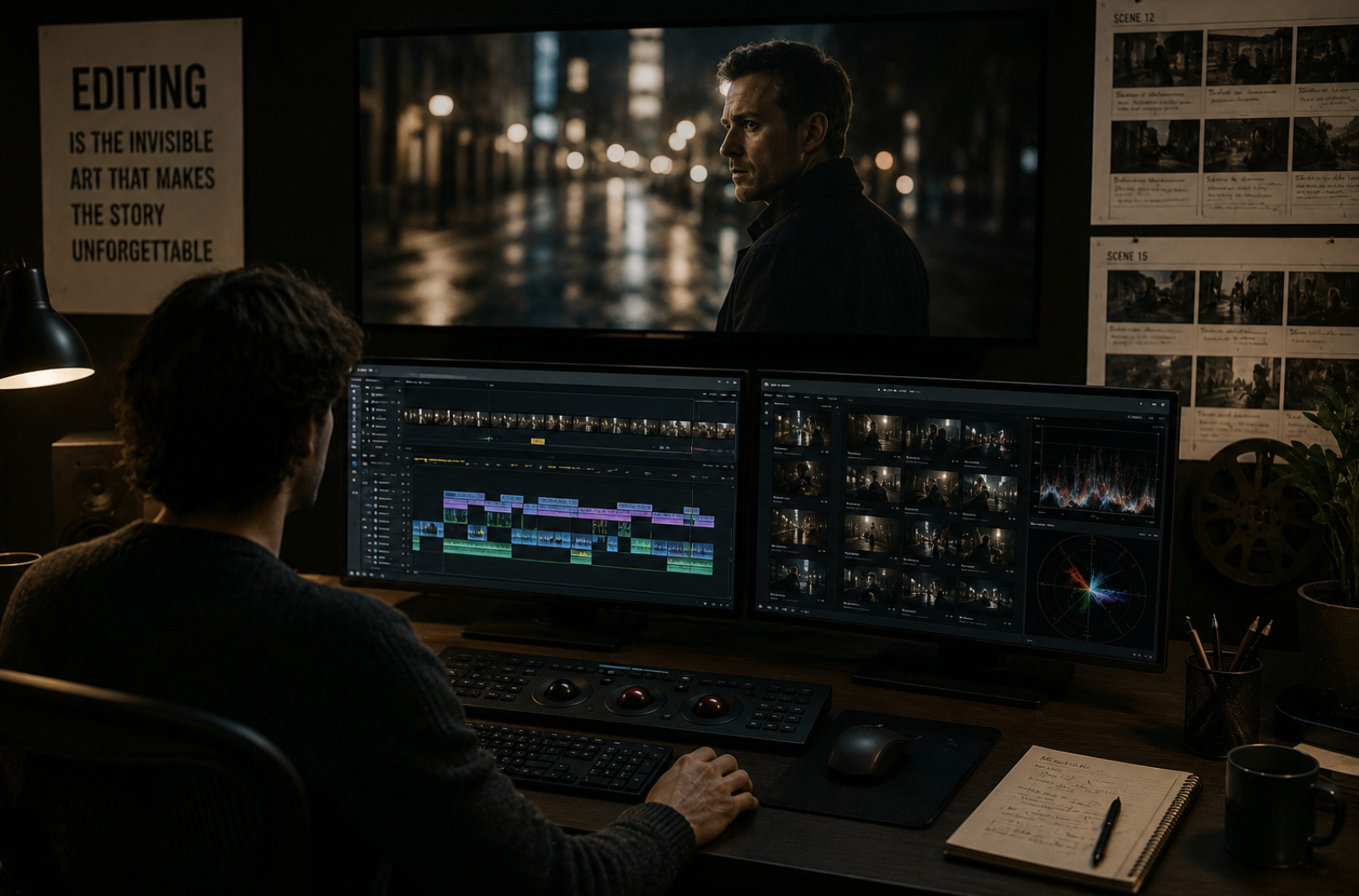
To appreciate the long take, you have to understand what it defies. The normal language of film is editing — cutting between shots to assemble a scene, choosing what the audience sees moment to moment, controlling rhythm and emphasis through the placement of each cut. This is so fundamental that it is nearly invisible; we absorb the constant cutting of a typical scene without registering it at all, which is exactly the point of good editing, as we explored in the invisible art of film editing. The cut is cinema's default tool, the thing it does more than any other.
The long take is the deliberate rejection of that default. Instead of building a scene from fragments, the director commits to a single continuous shot, letting time unfold in front of the camera exactly as long as it would in life, with no cut to compress, rearrange, or redirect our attention. This is not merely a technical choice but an aesthetic statement — a decision to trade the control and safety of editing for something editing can never provide. By refusing to cut, the filmmaker changes the audience's entire relationship to what they are watching, and does so precisely because the absence of cuts is so unusual that we feel it, even when we cannot name what we are feeling.
What the unbroken shot does to us
The effects of a sustained long take are powerful and specific. The most immediate is a heightened sense of realism and immersion. Because the shot does not cut, time passes on screen as it does in reality, unbroken and undisguised, and that continuity makes a scene feel like something genuinely happening in front of us rather than something assembled after the fact. There is no editorial hand rearranging the moment; we simply witness it, and that witnessing carries a weight and presence that rapid cutting dilutes.
The long take can also generate almost unbearable tension. When the audience knows, even subconsciously, that there will be no cut to relieve the moment or jump past the danger, the sustained shot builds a pressure that editing would release. We are trapped in the continuous present of the scene with no escape, and dread accumulates in a way it cannot when a cut might arrive at any second. And beyond tension, the long take is simply a source of awe: a technically complex unbroken shot is a spectacle in itself, a display of coordination and control that impresses the audience with the sheer difficulty of pulling it off. Realism, tension, and awe — these are the gifts the technique offers, and none of them is fully available through conventional cutting.
Why it is so hard to pull off
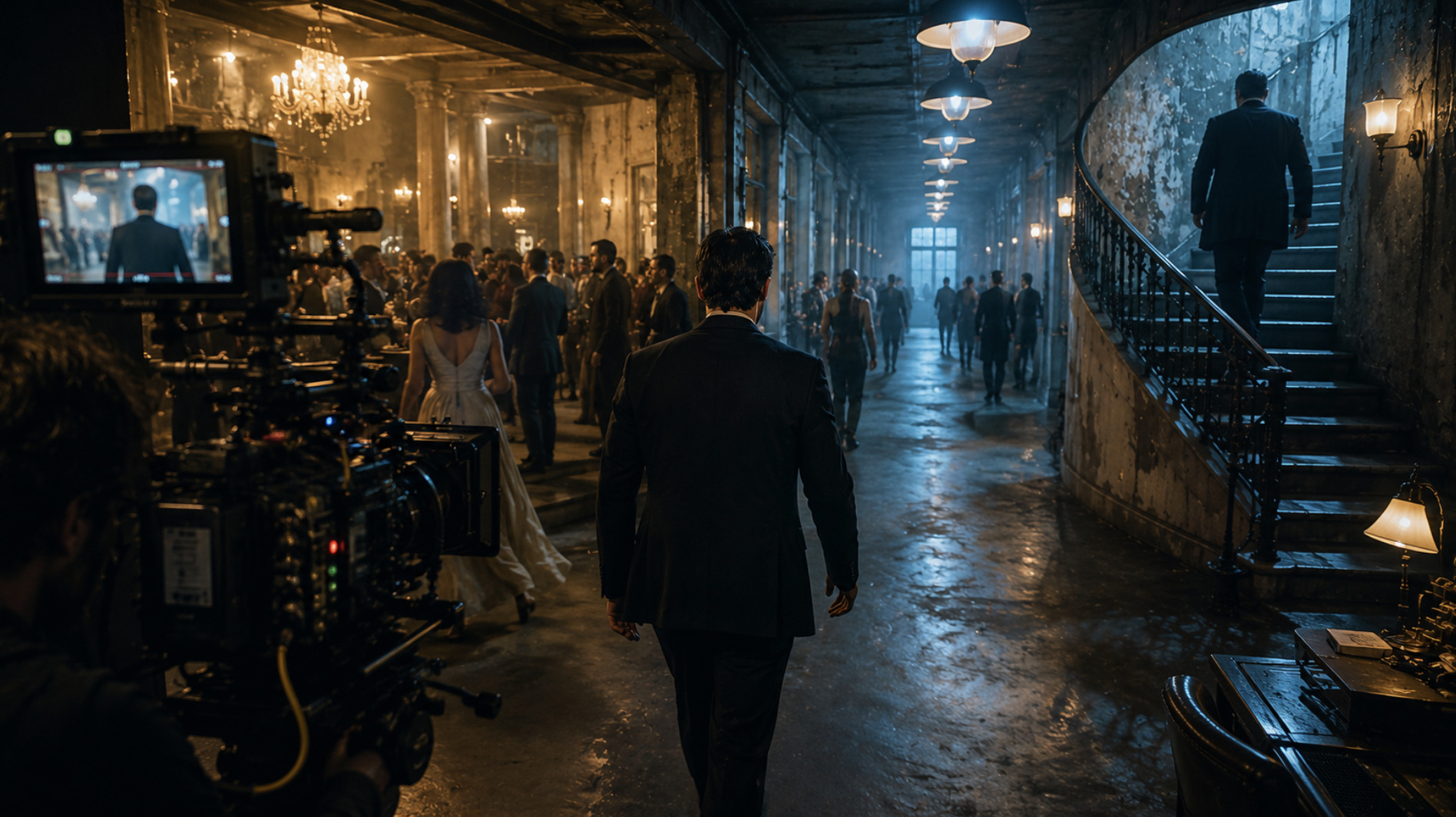
That awe is earned, because a long take is genuinely, punishingly difficult to execute, and understanding why deepens the respect it commands. In a normal shot, a mistake is a minor matter — you cut, reset, and try again from that point. In a long take, a single error at any moment ruins the entire shot, forcing everyone to start over from the very beginning. Every element has to be perfect simultaneously and continuously: the actors' performances sustained without a stumble, the camera's complex movement flawless, the timing exact, often across several minutes.
This turns a long take into an extraordinary feat of coordination. Camera operators, actors, and an entire crew must perform in precise synchronisation, like a piece of choreography where one wrong step means the whole dance restarts. The technical demands multiply with the length and complexity of the shot, which is why ambitious long takes can require exhausting numbers of attempts to capture cleanly. The difficulty is not incidental to the technique's power; it is part of it. When we sense how easily the shot could have gone wrong and did not, the achievement itself becomes part of what we admire — a kinship with the hand-built craftsmanship we celebrated in the practical effects that still outshine modern CGI.
A choice, not a trick
For all its power, the long take is not automatically better than good editing, and the best filmmakers understand it as a specific tool for specific ends rather than a way to show off. Editing exists because cutting is genuinely the right way to tell most scenes — to control pace, emphasis, and meaning with precision. The long take is the right choice when a director wants exactly what unbroken continuity provides: the raw realism of unedited time, the trapped tension of no escape, or the spectacle of a feat performed whole. Used for those reasons, it is transcendent. Used merely to impress, it can feel like a stunt.
That is why the technique still astonishes even in an age of endless technical wizardry. A great long take is not just difficult; it is meaningfully difficult, its form fused to its purpose, so that the unbroken shot is doing something no cut could. Watching one, we feel the difference even before we understand it — the scene breathes with a continuity that editing cannot fake, and the knowledge that no cut is coming changes how we experience every second. To watch films attentively is partly to notice these choices, a habit we encouraged in how to watch a film like a critic. The long take rewards that attention more than almost any technique in cinema, because it dares to do the one thing film usually refuses: to simply not cut away.
Frequently asked questions
What is a long take in film? A long take is a single, continuous shot that runs through an entire sequence without any cuts. It deliberately rejects the normal language of film, which builds scenes by cutting between many separate shots, and instead lets time unfold unbroken in front of the camera exactly as it would in life.
Why do directors use long takes? For effects that editing cannot provide: a heightened sense of realism and immersion, because time passes unbroken and undisguised; intense tension, because the audience senses there will be no cut to relieve the moment; and sheer awe at a technically complex feat performed in one continuous shot.
Why are long takes so difficult to film? Because a single mistake at any point ruins the entire shot, forcing a restart from the beginning. Everything — the actors' performances, the camera's movement, the timing — must be flawless simultaneously and continuously, often for minutes, requiring precise coordination from the whole crew and frequently many attempts to capture cleanly.