Why the Casino Is One of Cinema's Most Powerful Settings
Think of the most electric scenes in film, and a surprising number of them happen at a gambling table. The silent poker showdown where a character is playing fo...

Think of the most electric scenes in film, and a surprising number of them happen at a gambling table. The silent poker showdown where a character is playing for far more than money. The roulette wheel spinning while a fortune and a marriage ride on it. The vast, glittering casino floor that is also, somehow, a place of menace and decay. From noir to the modern blockbuster, cinema returns again and again to the world of gambling, and it is not for the glamour alone. The casino is one of film's most powerful settings because it compresses everything cinema loves — tension, character, greed, deception and the raw drama of chance — into a single, visually intoxicating space. Understanding why it works so well says a lot about how film generates its most gripping moments.

A setting built for tension
The first thing the casino gives a filmmaker is tension, pre-loaded and inexhaustible. Every hand of cards, every spin of the wheel, every roll of the dice is a small, self-contained drama with a winner, a loser, and an outcome nobody yet knows. A gambling scene therefore arrives with built-in suspense that an ordinary location simply does not have — the director does not need to manufacture stakes, because the situation supplies them. Something is on the line, the result is genuinely uncertain, and the audience leans in to see how it lands.
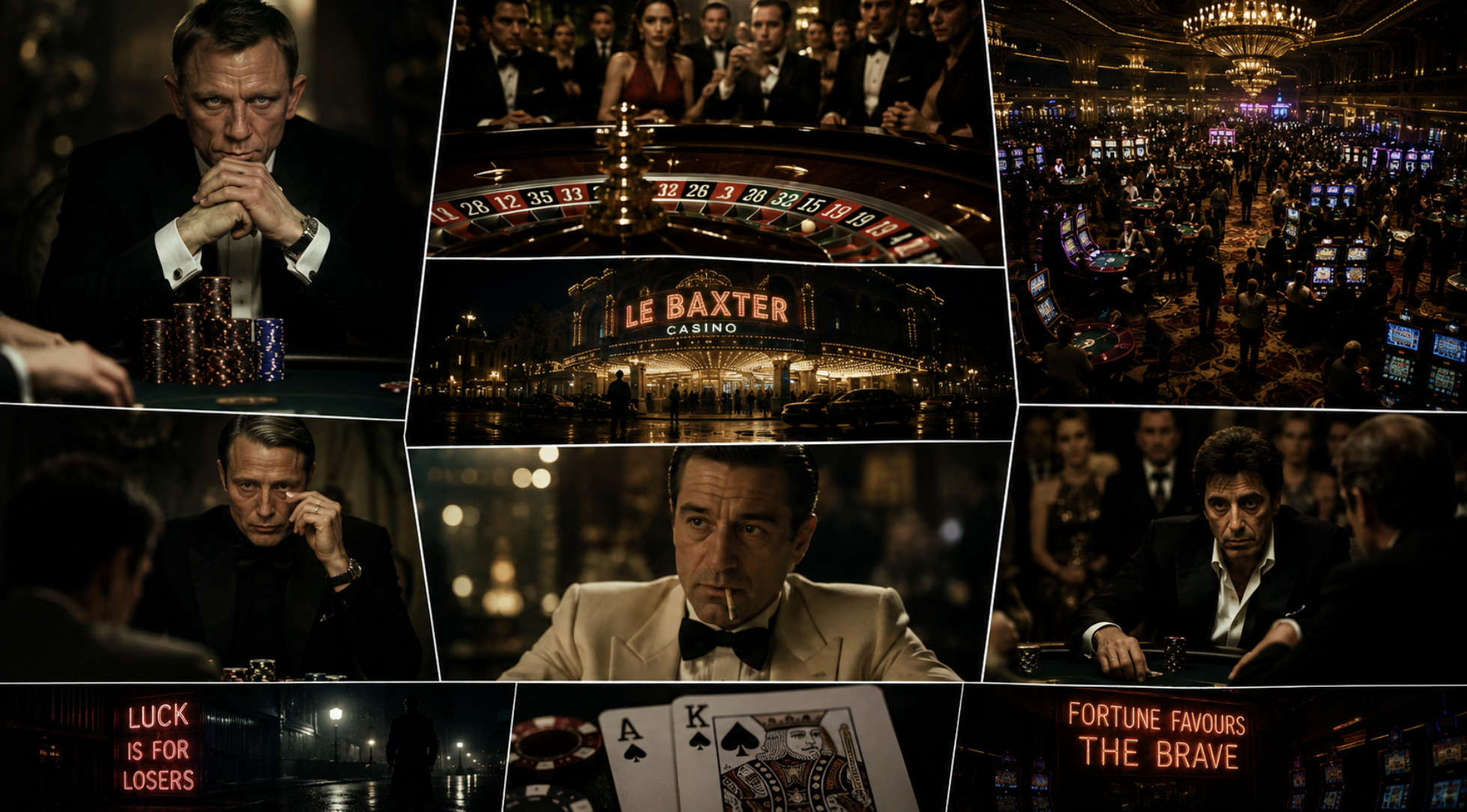
This is why gambling sequences so often become a film's most memorable set-pieces. The camera can hold on a face waiting for a card, cut to the trembling stack of chips, linger on the wheel as it slows — and every one of those images carries real jeopardy, because the outcome matters and cannot be predicted. Cinema thrives on characters under pressure making choices with consequences, and the gambling table is a machine for producing exactly that pressure, over and over, in a confined and visually rich space. The setting does a great deal of the storytelling before a line of dialogue is spoken.
Character revealed under pressure
Beyond tension, the casino is a superb device for revealing character, which is why filmmakers use it to expose who people really are. How a character gambles — reckless or calculating, calm or desperate, honest or cheating — tells the audience volumes in a way that pages of dialogue could not. The gambling table strips people to their appetites and their nerve, and cinema, a visual medium, seizes on that: a single held glance, a bluff maintained or broken, a bet placed too eagerly, and we understand something essential about a person. The casino turns internal character into visible action.
Film is especially drawn to certain gambling archetypes because they are so cinematically potent. The cool professional who reads the table and everyone at it; the desperate gambler chasing a debt into ruin; the charming cheat running a long con — each is a character defined by their relationship to risk, and each is immediately readable and immediately dramatic. The genre uses the casino to place these figures under maximum pressure and let the camera watch what emerges. When a filmmaker wants to show us who someone truly is, sitting them down at a high-stakes table is one of the most efficient tools available, because there is nowhere to hide when real money and real nerve are on the line.
Greed, deception and the con
The casino also hands cinema its favourite themes on a plate: greed and deception. Gambling and cheating are ancient companions, and the mechanics of the con — the marked deck, the rigged wheel, the elaborate sting played out on the casino floor — map perfectly onto film's love of schemes, double-crosses and reveals. The heist set in a casino, the con with a twist the audience never saw coming, the plan within a plan: the gambling world supplies a ready-made vocabulary of trickery that audiences already half understand and instinctively enjoy watching unspool.
As this world has modernised, so has its cinematic vocabulary, because the settings of gambling keep evolving and film follows them. The smoky backroom gave way to the neon casino floor, and gambling has increasingly moved online, opening fresh territory for storytellers interested in modern greed and deception. The rise of online platforms, from betting apps to sites like Dudespin, has given contemporary film new settings and mechanisms — digital money, remote anonymity, algorithmic odds and new species of con and debt — while preserving the timeless emotional core that made the casino cinematic in the first place. The tools change; the greed, the risk and the deception do not. A modern thriller can mine exactly the same human material as a classic casino noir, simply relocated to a screen.
Spectacle and moral atmosphere
There is a final, more sensory reason cinema loves the casino: it is a gift to the eye. Few environments are as inherently cinematic — the light, the colour, the movement, the density of faces and money and motion. A casino floor gives a director spectacle for free: a visually overwhelming space that photographs beautifully and fills the frame with energy. But the best gambling films use that spectacle for more than surface, turning the glamour into moral atmosphere. The dazzling floor becomes a place of temptation and corruption; the beauty and the danger sit in the same shot.
This doubleness is what elevates the great casino films above mere backdrop. The setting can be intoxicating and menacing at once, seductive and hollow, a paradise that is also a trap — and that tension is thematically rich, letting a film say something about desire, luck and ruin through the very look of the place. The casino, filmed well, is never just a location; it is an argument about the seductions and the costs of chance, made visible. That is the deepest reason cinema keeps returning to it: the setting is not only exciting to watch but meaningful to inhabit, a space where the film's ideas and its images become the same thing.
The house always wins, and so does the scene
Cinema keeps coming back to the casino because the two are made of the same material. Both are about chance and consequence, about people making high-stakes choices under pressure, about the thin, endlessly tested line between winning and ruin. The gambling setting hands a filmmaker tension, character, theme, spectacle and atmosphere in a single package, which is why it has survived every shift in film fashion and every change in how people actually gamble. It is not a cliché so much as a perfect fit — a world whose emotional logic mirrors cinema's own.
It is worth remembering, as viewers, that film dramatises gambling because it makes for gripping stories, not because it makes for good lives — the ruined gambler is compelling on screen for the same reasons the reality is painful off it. Cinema uses the casino as a source of drama and danger, and that dramatic power is entirely real; so is the fact that, in life, gambling is entertainment with a genuine cost rather than a path to fortune. That gap between the thrill on the screen and the risk in the world is, perhaps, the final reason the two fit so well: both understand, better than almost anything, that the wheel can stop on the wrong number, and that the breathless moment before it does is where all the drama lives.
Frequently asked questions
Why do so many films use casino settings? Because the casino compresses everything cinema thrives on into one space: built-in tension from every uncertain bet, character revealed under pressure, themes of greed and deception, and striking visual spectacle. A gambling scene arrives pre-loaded with jeopardy and meaning, doing much of the storytelling before a word is spoken.
What makes a gambling scene so tense in film? Every hand, spin or roll is a small drama with an unknown outcome and something on the line, so the suspense is inherent rather than manufactured. The camera can hold on a waiting face or a trembling stack of chips, and each image carries real jeopardy because the result matters and cannot be predicted.
How has the casino as a film setting changed over time? It has evolved with gambling itself — from smoky backrooms to neon casino floors and, increasingly, to online platforms. Modern films draw on digital money, anonymity and new kinds of con while keeping the timeless emotional core of greed, risk and deception that made the casino cinematic in the first place.