Mike and Nick and Nick and Alice Review A Chaotic Genre Mashup That Struggles to Find Its Voice
Some films arrive with a clear identity. Others spend their entire runtime trying to figure out what they are. Mike and Nick and Nick and Alice firmly belongs t...

Some films arrive with a clear identity. Others spend their entire runtime trying to figure out what they are. Mike and Nick and Nick and Alice firmly belongs to the second category — a restless, genre-hopping crime comedy that throws together time travel, gangsters, romance, and meta-humor, hoping that momentum alone will hold everything in place.
Directed by BenDavid Grabinski, the film feels less like a cohesive narrative and more like an experiment in tone — one that occasionally sparks with energy but rarely settles into something memorable.
A Premise Built for Chaos
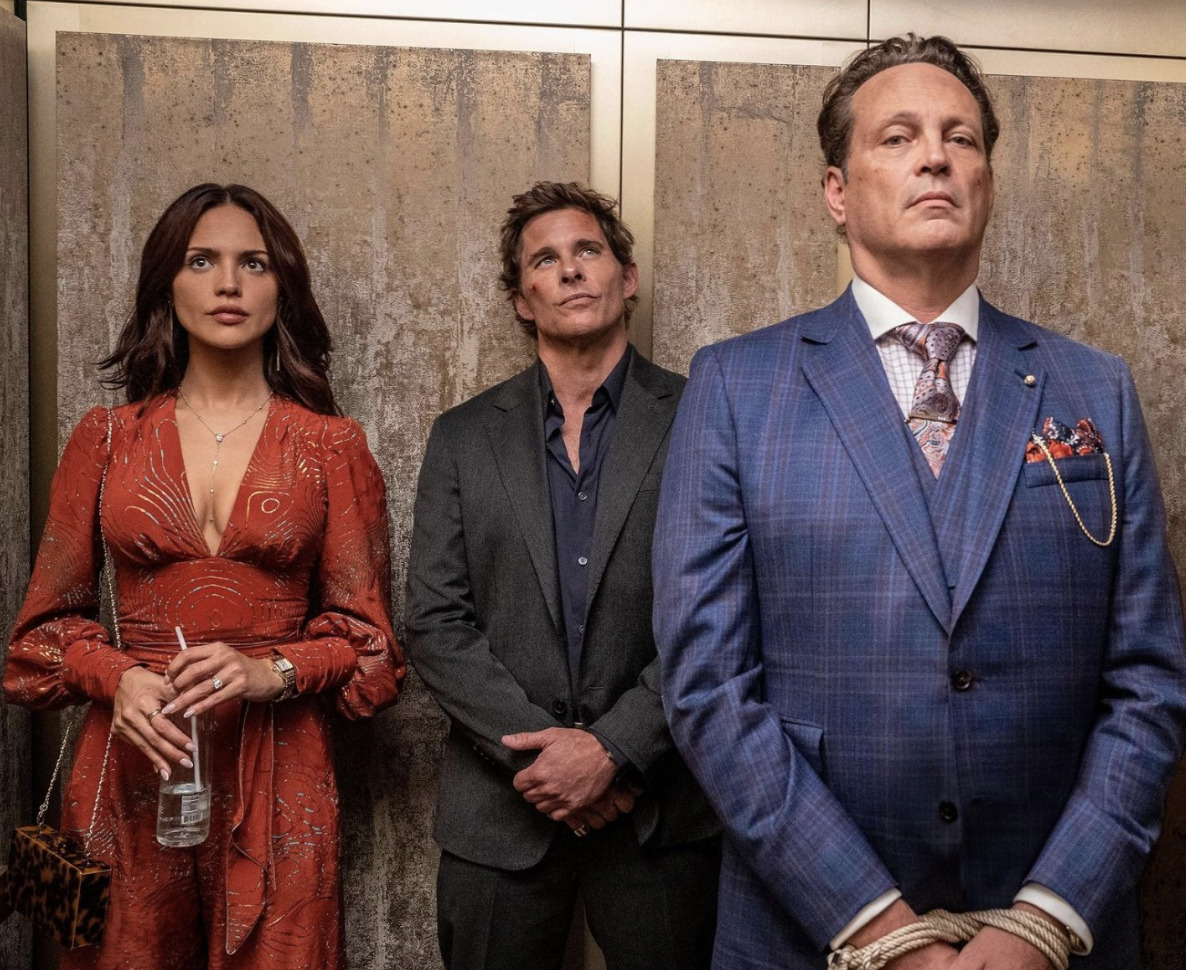
At the center of the story is Mike, played by James Marsden — a hitman on the verge of walking away from his life of crime. His plan is simple: spend one last night with Alice, the woman he loves, and disappear.
The problem is that Alice is married.
The bigger problem is that her husband Nick — portrayed by Vince Vaughn — shows up at Mike’s hotel room.
And the real twist? This isn’t just Nick. It’s Nick from the future.
Arriving from six months ahead, he brings a warning: Mike is going to die, and the only way to prevent it is to follow a new plan — one last job that will supposedly change everything.
From here, the film sets up a familiar structure: a time-loop narrative where characters attempt to rewrite fate by confronting alternate versions of themselves. It’s a concept with enormous potential — one that has supported both high-concept science fiction and tightly constructed thrillers.
But Mike and Nick and Nick and Alice treats it less as a foundation and more as a convenient excuse to move between genres.
Style Without Center
The film’s biggest issue isn’t its ambition — it’s its lack of focus.
Crime comedy.
Romantic triangle.
Time-travel paradox.
Buddy story.
All of these elements exist, but none of them fully develop. Instead of building tension through narrative progression, the film jumps from idea to idea, relying on rapid dialogue and stylistic flourishes to maintain engagement.
There’s a clear attempt to channel the rhythm of filmmakers known for dialogue-driven tension and stylized violence. Characters talk a lot — often in long, loosely structured conversations filled with references, sarcasm, and attempts at wit.
But where great dialogue sharpens character and drives conflict, here it often functions as filler. The exchanges feel improvised in tone but not in purpose — energetic, but rarely precise.
Jokes land occasionally, but just as often miss entirely. The film moves quickly, but without direction, speed becomes noise rather than momentum.
Performance as the Film’s Anchor
If the film holds together at all, it’s because of its cast.
Vince Vaughn carries a significant portion of the narrative weight, playing dual versions of the same character. It’s a familiar device, but one that he handles with surprising control. His future version of Nick carries hints of regret and urgency, while the present-day version leans more into volatility and ego.
The contrast isn’t deeply explored, but it’s enough to suggest an internal conflict that the script never fully develops.
James Marsden, meanwhile, brings an easy, natural charisma to Mike. He moves comfortably between comedy and action, grounding the film in a performance that feels more coherent than the story around it.
Eiza González as Alice adds another layer, though her role remains underwritten — more symbolic than fully realized. She exists as a catalyst for conflict rather than an independent force within it.
Together, the cast creates moments of engagement that the script alone wouldn’t sustain.
Action That Feels Familiar
From a technical standpoint, the film delivers what the genre demands: shootouts, chases, confrontations.
But these sequences rarely feel distinctive.
They are competently staged, occasionally dynamic, but ultimately predictable. There’s a sense that each set piece exists because it should, not because it emerges naturally from the story.
Visually, the film borrows heavily from recognizable genre aesthetics — saturated colors, slow motion, rapid cuts — without adding a unique perspective. It’s imitation rather than interpretation.
Nothing looks bad.
But very little feels specific.
Energy Without Impact
And yet, despite all of this, the film is not lifeless.
There’s an undeniable energy running through it — a kind of chaotic enthusiasm that prevents it from becoming boring. Every so often, a scene clicks. A joke lands. A moment of absurdity turns unexpectedly effective.
These flashes are enough to keep the film moving, even when the larger structure fails to support them.
It’s not carefully constructed entertainment. It’s reactive, inconsistent, occasionally messy — but never completely disengaged.
A Product of the Streaming Era
More than anything, Mike and Nick and Nick and Alice feels designed for a very specific type of viewing experience: casual, low-commitment, algorithm-driven entertainment.
It has recognizable actors.
A concept that sounds interesting in a sentence.
A mix of genres broad enough to appeal to different audiences.
It doesn’t demand attention — it fills time.
And in that sense, it succeeds.
This is not a film built for deep analysis or long-term impact. It’s built for immediacy — for the kind of viewing where the goal isn’t to be challenged, but to be entertained just enough.
Final Verdict
Mike and Nick and Nick and Alice is a film that wants to be everything at once — and ends up never fully becoming anything.
It’s entertaining in short bursts, carried by a capable cast and a steady flow of movement and dialogue. But its lack of focus, originality, and narrative discipline prevents it from leaving a lasting impression.
It’s not a failure.
It’s not a standout.
It exists somewhere in between — a fast-moving, moderately enjoyable piece of genre cinema that does just enough to work in the moment, and almost nothing to stay with you afterward.
In a different context, that might feel like a compromise.
Here, it feels like the entire point.