Why “Project Hail Mary” Feels Like the Last Optimistic Sci-Fi Blockbuster
When Sci-Fi Stops Being Cynical and Starts Believing AgainIn a decade increasingly defined by fatigue, overstimulation, and quiet existential pressure, mainstre...

When Sci-Fi Stops Being Cynical and Starts Believing Again
In a decade increasingly defined by fatigue, overstimulation, and quiet existential pressure, mainstream cinema has largely mirrored the mood: dim lighting, emotional detachment, narrative pessimism. Big-budget storytelling has leaned toward irony, distance, and controlled despair.
Against that backdrop, Project Hail Mary arrives as something almost structurally unusual — not because of its premise, but because of its tone.
It doesn’t resist darkness. It simply refuses to center it.
A Story Built on Function, Not Myth
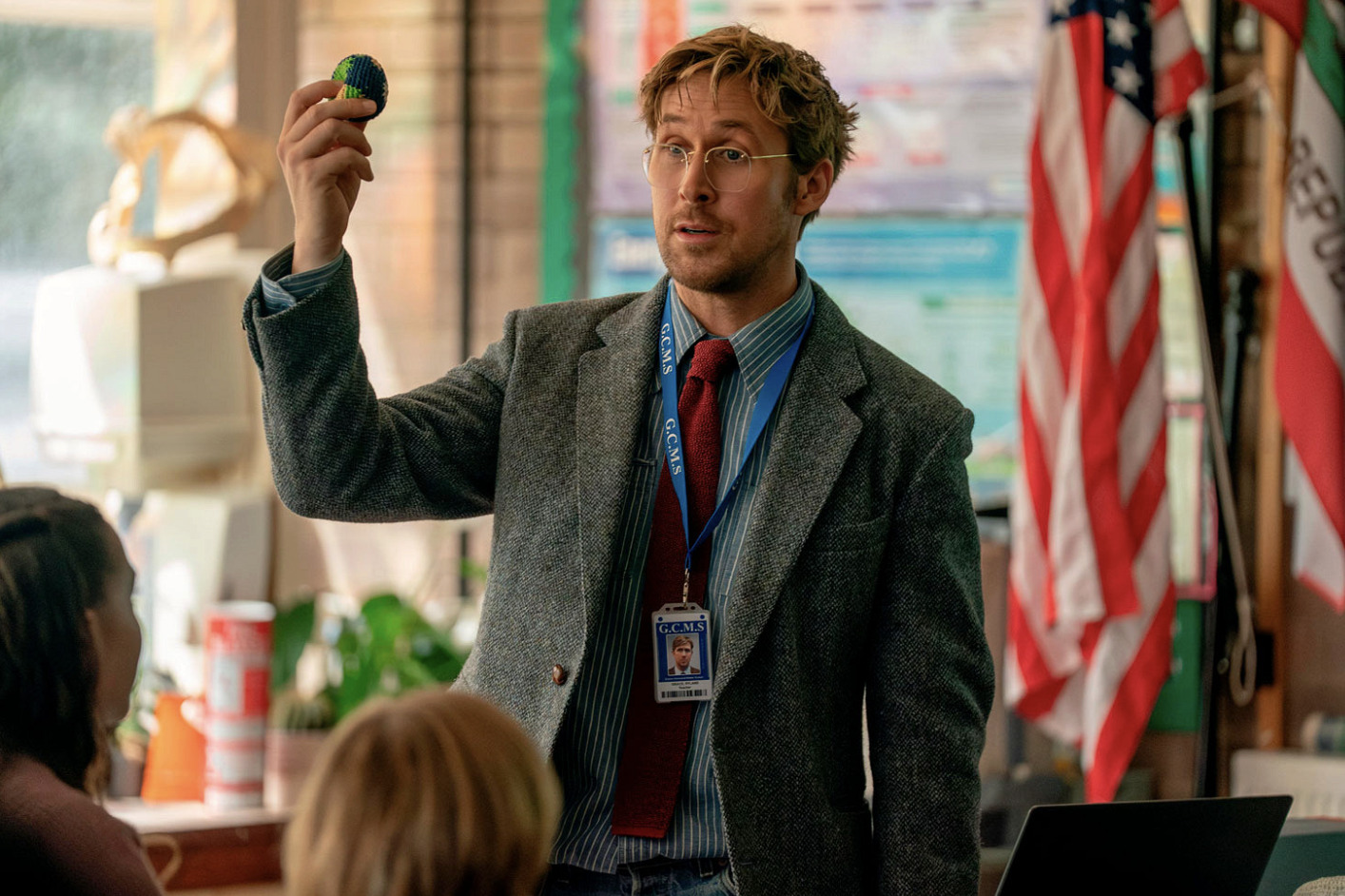
At its core, the film follows Ryland Grace, a schoolteacher-turned-astronaut who wakes up alone aboard a spacecraft, with no memory and no crew — only a mission: understand why the Sun is dying.
What follows is not a traditional hero arc. Grace is not designed as a mythological savior. He is reactive, uncertain, often afraid — and precisely because of that, believable.
The narrative structure reflects this approach. Instead of building tension through spectacle alone, the film operates through layered reconstruction: memory fragments, scientific reasoning, and iterative problem-solving.
It behaves less like a blockbuster and more like a system.
Intelligence as Process, Not Decoration
One of the film’s strongest decisions is how it treats science — not as aesthetic complexity, but as narrative mechanics.
Concepts are introduced, broken down, revisited, and re-applied. The viewer is not overwhelmed; they are gradually onboarded.
This mirrors a broader shift visible in modern digital environments, where systems are designed to guide users step-by-step through complexity without exposing the underlying structure.
In high-functioning platforms — whether in tech, finance, or interactive environments like Westace Casino — the same principle applies: reduce cognitive load, maintain flow, and keep the user inside a continuous decision loop.
The film, intentionally or not, reflects this logic. It doesn’t just tell a story — it manages engagement.
The Millennial Core: Transparency Over Subtext
What truly separates Project Hail Mary from earlier sci-fi traditions is its complete rejection of narrative opacity.
There is no hidden philosophical layer waiting to be decoded. Emotions are explicit. Motivations are verbalized. Relationships are direct.
Where previous generations used space to explore ambiguity, this film uses it to remove it.
This is not a weakness. It is a generational signature.
Millennial storytelling prioritizes clarity over interpretation — not because it lacks depth, but because it assumes the audience values emotional accessibility over symbolic distance.

Rocky: The Anti-Alien
The introduction of Rocky — the alien counterpart — could have easily shifted the film into familiar territory: mistrust, conflict, revelation.
Instead, the film makes a deliberate choice: immediate cooperation.
The relationship is not built on suspicion, but on mutual problem-solving. Language is not a barrier; it is a task to be solved.
This is where the film becomes quietly radical.
It suggests that intelligence — regardless of origin — converges through structure, not emotion. Communication becomes an engineering problem, not a philosophical one.
Direction Without Cynicism
Phil Lord and Christopher Miller approach the material with something rare in contemporary blockbuster filmmaking: controlled optimism.
Their direction avoids both parody and self-importance. Instead, it operates with a kind of procedural sincerity — scenes unfold with rhythm, not urgency.
Even moments that could be cut for efficiency are left intact. Karaoke sequences, minor interactions, seemingly unnecessary pauses — they remain.
Not as indulgence, but as texture.
In an industry optimized for retention metrics and pacing algorithms, this choice feels almost counterintuitive.
Visual Language: Precision Over Spectacle
Visually, the film aligns with its narrative philosophy.
Cinematography avoids excess. Space is not romanticized — it is functional, navigable, measurable.
Even the alien design rejects hyper-polished CGI in favor of tactile presence, reinforcing the film’s broader commitment to grounded experience.
The result is immersion without overstimulation.
The Real Context: Why This Film Exists Now
It’s difficult to separate Project Hail Mary from the systems that enabled it.
Modern entertainment is no longer just storytelling — it is infrastructure. Content is designed, tested, optimized, and distributed within ecosystems that prioritize engagement efficiency.
In this context, platforms like Westace Casino operate on a similar principle: seamless interaction, minimal friction, sustained attention.
The difference is intent.
Where platforms optimize behavior, Project Hail Mary still attempts to justify it — to give meaning to action, not just continuity.
Final Thought
Project Hail Mary is not a perfect film. At times, it is overly direct, occasionally indulgent, and structurally uneven.
But it does something increasingly rare:
It believes that intelligence, cooperation, and curiosity are still enough to carry a story — without irony, without collapse, without retreat into darkness.
In a landscape dominated by systems designed to predict and guide behavior, that belief alone feels almost… disruptive.