The Boroughs Review — Netflix’s Most Unexpected Sci-Fi Drama Is About Aging, Grief, and the Terror of Time
There is something quietly radical about the premise of The Boroughs. In an era where streaming platforms remain obsessed with youth, origin stories, and algori...

There is something quietly radical about the premise of The Boroughs. In an era where streaming platforms remain obsessed with youth, origin stories, and algorithmically engineered protagonists in their twenties, Netflix has released a supernatural mystery led almost entirely by elderly characters — and somehow turned it into one of the most emotionally effective genre series of the year.
At first glance, the show sounds like an easy elevator pitch: Stranger Things in a retirement community. The comparison is inevitable, especially because the series is executive produced by Matt Duffer and Ross Duffer. But The Boroughs quickly proves that it is not merely borrowing nostalgia aesthetics from the Duffer playbook. It uses sci-fi horror to explore something television rarely approaches with sincerity — the psychological reality of aging and the unbearable awareness of limited time.
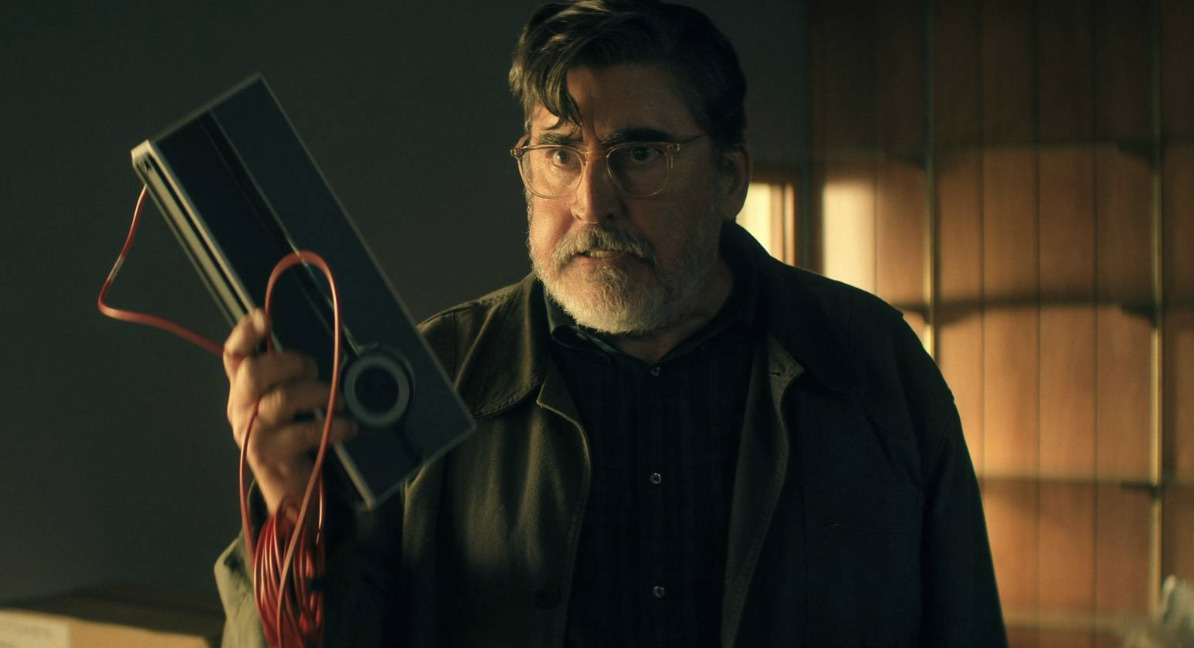
The series, created by Jeffrey Addiss and Will Matthews, takes place in a luxurious retirement settlement hidden in the New Mexico desert. The community appears peaceful, carefully managed, and oddly detached from the outside world. Into this environment arrives Sam Cooper, played by Alfred Molina, a grieving engineer still psychologically destroyed by the death of his wife. Soon after moving in, Sam witnesses a horrifying attack connected to a monstrous entity lurking beneath the polished surface of the community. What begins as a supernatural mystery slowly unfolds into something stranger, sadder, and far more existential.
The brilliance of The Boroughs lies in the fact that it refuses to infantilize its older characters. Hollywood often treats elderly protagonists in one of two ways: either as sentimental symbols of wisdom or as comic relief disconnected from modernity. This series does neither. Its characters are sexual, bitter, lonely, manipulative, frightened, jealous, stubborn, exhausted, and deeply alive.
Geena Davis gives one of the strongest performances of her later career as Renee, a woman unwilling to surrender her emotional or physical desires simply because society expects her to disappear quietly into old age. Alfre Woodard brings extraordinary emotional gravity to Judy, a former journalist trapped between grief, guilt, and collapsing intimacy. Denis O'Hare delivers perhaps the show’s most devastating arc as Wally, a former AIDS-era doctor now confronting his own physical deterioration with mounting terror.
And then there is Molina.
For years, Molina has been one of cinema’s great supporting actors — consistently excellent, rarely allowed to carry projects of this scale. Here, he finally receives a leading role worthy of his abilities. His Sam is not a heroic archetype. He is confused, grieving, irritable, emotionally fractured, and frequently exhausted by the effort of continuing to exist. Molina plays him with astonishing restraint. Even the quieter scenes carry a sense that the character is permanently one emotional collapse away from losing contact with reality altogether.
What separates The Boroughs from more conventional Netflix sci-fi is its understanding that horror becomes more frightening when tied to irreversible time. Younger protagonists usually believe the future still belongs to them. The residents of The Boroughs know the opposite. Every decision carries the weight of finality. Every friendship feels temporary. Every morning is measured against physical decline.
The show’s central concept — that an otherworldly force is literally stealing time from elderly residents — is almost painfully literal, but that directness becomes the source of its emotional power.
Visually, the series sits somewhere between 1950s Americana, desert noir, and retrofuturist horror. The ochre desert palette occasionally becomes overbearing, washing entire sequences in dusty yellows and muted browns, but the aesthetic choice feels intentional. The world of The Boroughs constantly appears dehydrated, exhausted, and slightly unreal, as if the environment itself is slowly decaying alongside its residents.
The creature design will feel familiar to genre fans. Certain moments evoke A Quiet Place, while the insectoid textures and distorted body horror occasionally recall 9 or even late-period The Twilight Zone. The show is clearly assembled from recognizable influences: Stranger Things, Gremlins, It, and especially Cocoon. The creators themselves openly referenced Cocoon as a tonal inspiration.
Yet despite those influences, The Boroughs rarely feels derivative because its emotional perspective is so unusual. The series is not really about monsters. It is about mortality. The horror elements simply externalize fears the characters were already carrying before the supernatural plot began.
That emotional sincerity becomes most apparent in the final episodes, where the narrative shifts away from mystery mechanics and toward acceptance, memory, and grief. The series repeatedly asks a difficult question: if you knew your remaining time was short, would you spend it trying to survive longer — or trying to live honestly?
The answer The Boroughs offers is unexpectedly humane.
The show occasionally struggles under the weight of its ambitions. Some mythology reveals become convoluted, and the pacing in the middle episodes briefly slows beneath exposition-heavy dialogue. The visual effects also fluctuate in quality. But these flaws become surprisingly easy to forgive because the series understands something many modern streaming productions have forgotten: audiences will accept imperfect spectacle if the emotional foundation feels real.
Most importantly, The Boroughs avoids cynicism. In lesser hands, the premise could have become ironic or cruel — a dark joke about elderly people fighting monsters. Instead, the series treats its characters with dignity without sanitizing their pain. That balance is extraordinarily difficult to achieve.
In the end, The Boroughs succeeds because it understands that aging itself is already science fiction. The body transforms into something unfamiliar. Time accelerates. Memory fractures. The people around you disappear one by one. The future slowly shrinks. The show simply turns those fears into literal monsters.
And somehow, against all expectations, it becomes deeply moving because of it.