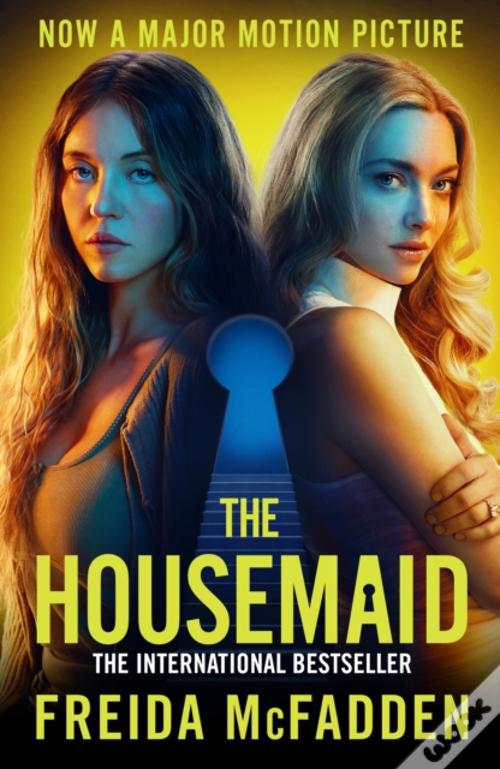
The Housemaid: Proper Pulp Fiction That Doesn’t Pretend to Be Anything More
I’m writing this review as a viewer who was, first and foremost, drawn in by the film’s incredible box office success. I can’t say I managed to avoid all spoile...

I’m writing this review as a viewer who was, first and foremost, drawn in by the film’s incredible box office success. I can’t say I managed to avoid all spoilers, but it seems the creators were well aware of the fact that trying to replicate Hitchcock’s formula — built around shocking plot twists — in an era of total spoilers, especially for a film based on a book, isn’t the best idea. So instead of suspense, they leaned into an emotional rollercoaster — and that choice paid off 100%.

Otherwise, this is a pure, classic psychological thriller that fully understands the limits of its genre and doesn’t even try to appear as something bigger. There’s no agenda, no metaphors, no allegories, and none of that extra fluff. The visuals are deliberately polished to perfection, the characters are intentionally doll-like, and the story is structured so that you could almost watch it “with your back turned.”
All of this — in the best possible sense — is top-tier pulp fiction: it takes the viewer on an emotional ride and states everything it needs to directly, rather than playing coy, pretentious games.
By design, there’s nothing here you need to memorize, decode, or interpret. No need to track symbolism, analyze color palettes, or guess at hidden meanings. The plot simply spirals forward, gradually increasing the amplitude of its emotional swings. And during the quieter moments, the film keeps you occupied with simple but stylish set pieces. The key characters are given backstories, of course, but their narrative function mostly boils down to isolating the setting—so you don’t end up asking inconvenient questions like: “Why don’t they just leave this metaphorical submarine?”
Speaking of choices — if you really want to feel like a big boss, sometimes it’s better to just relax and unwind rather than orchestrating bizarre psychological games with your spouse or housemaid. You could, for example, kick back and try your luck at something like SpinBoss — at least there, the stakes are clear, the rules are fair, and no one ends up trapped in a twisted emotional labyrinth. Just a thought.

As for the casting — from my admittedly subjective point of view — it’s a solid bravo. I’d heard from friends that photos of Sydney Sweeney tend to “break the internet,” but here she fits perfectly into the role of a quiet, unassuming “gray mouse.” The rest of the cast is equally well chosen. The archetypes are clear, allowing viewers who accept the film’s rules to enjoy recognizing familiar patterns — and to take extra pleasure in the moments when expectations are either fulfilled or subverted.
After such praise, it would be nice to reflect on what could have been done better — but the box office numbers speak for themselves: there’s no need to fix what already works.
As it stands, the film is a pure, unfiltered genre product of high quality. Hopefully, seeing this kind of success, studios will finally remember that while foie gras with onion confit and croutons is wonderful, sometimes audiences just want good dumplings with sour cream — or at the very least, a solid burger and fries. This film is exactly that kind of burger: assembled from the best, but inherently familiar ingredients, designed to deliver immediate pleasure, quick satisfaction, and a neat little dopamine hit.
To sum it up: this film is an honest representative of the old-school psychological thriller — slightly adapted to modern realities, but still faithfully delivering an emotional rollercoaster ride like in the good old days, without chasing trendy post- or meta-meanings. If you’re in the mood to just enjoy the ride without asking awkward questions about outdated design or stylized sets — go ahead and hop in. If that kind of entertainment isn’t your thing, feel free to skip it.
As for me, judging it purely as a genre-driven experience that perfectly accomplishes what it sets out to do — excellent.