The Odyssey, Christopher Nolan and the Question of What Epic Cinema Is For
On July 17, 2026, Christopher Nolan's The Odyssey arrives in cinemas worldwide. It is the most anticipated film of the year — possibly of the decade — and it ca...

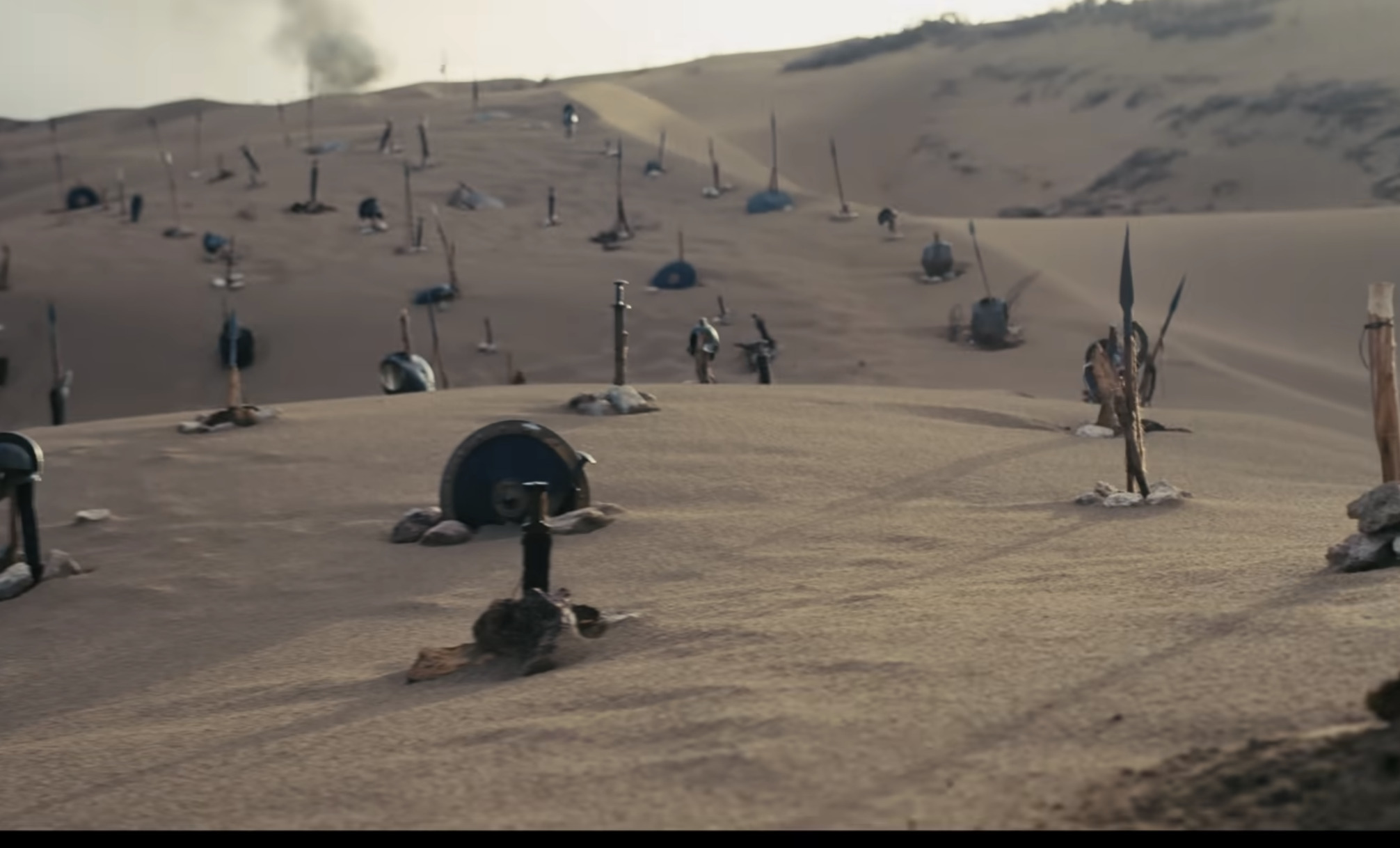
On July 17, 2026, Christopher Nolan's The Odyssey arrives in cinemas worldwide. It is the most anticipated film of the year — possibly of the decade — and it carries with it a weight of expectation that would crush most films before they reach the screen. The question worth asking, before the reviews arrive and the box office numbers are tallied, is not whether it will be good. Nolan's track record suggests it will be, at minimum, serious. The question is what it is attempting — what Nolan thinks an adaptation of Homer's Odyssey can be in 2026, shot on IMAX film across six continents, with a cast that includes Matt Damon, Tom Holland, Anne Hathaway, Zendaya, Robert Pattinson, Charlize Theron, Lupita Nyong'o, and, in a choice that has generated more discussion than any other casting decision this year, Travis Scott.
That last choice is the key to understanding everything else.
What the Cast Is Telling You
A blockbuster adaptation of The Odyssey cast in the conventional mode would look like a very expensive rendering of the classical tradition: the lead actor in his fifties, weathered and commanding; the supporting cast drawn from the canon of serious dramatic actors; the production design aspiring to archaeological accuracy; the whole enterprise reverential in its approach to source material that is, after all, almost three thousand years old.
Nolan's cast is doing something different. Matt Damon as Odysseus is, in casting terms, a studied choice rather than a heroic one. Damon at 54 is an actor whose strength is intelligence and contained charisma rather than physical grandeur — an Odysseus who wins through cunning, not through force, which is exactly Homer's characterisation. Tom Holland as Telemachus places one of the most recognisable young faces in contemporary cinema in the role of the son in search of a father, a character whose emotional arc is in some ways the more important story of the epic. Anne Hathaway's Penelope. Charlize Theron's Circe. Robert Pattinson — who has spent the post-Twilight decade becoming one of the most interesting actors working, through choices ranging from Good Time to The Lighthouse to The Batman — as Antinous, the lead suitor.
And then Travis Scott as the Bard. Not as a generic character. As the Bard — the figure who is, in the economy of the Homeric tradition, the person who preserves and transmits the story itself. Nolan explained the casting to interviewers by drawing a connection between rap and oral poetry as analogous traditions: both forms of art built around the ability of a single voice to hold a room, to carry a narrative through performance, to make the transmission of cultural memory into an act of pleasure. This is not a gimmick. It is a thesis about what The Odyssey is.
The Odyssey has always been a story about a story being told. Homer's poem is set approximately four hundred years after the events it describes; the distance is built into the text. The story survives because bards preserved it. Nolan's decision to cast a contemporary figure of oral tradition in the role of the figure responsible for that preservation is a statement about continuity — about the unbroken line from Homer's bards to the griots to the rappers, all doing the same thing with their voices and their audiences.
The IMAX Gamble
Nolan shot The Odyssey on IMAX film — not the digital IMAX that has become an industry standard, but on newly developed large-format film stock that Universal announced as part of the project. The practical implications are enormous. IMAX film produces images of a resolution and dimensionality that no digital format currently matches. It is also more expensive, more difficult to work with, and requires a commitment to in-camera solutions that constrains the production in ways that most films at the $250 million budget level would consider unacceptable.
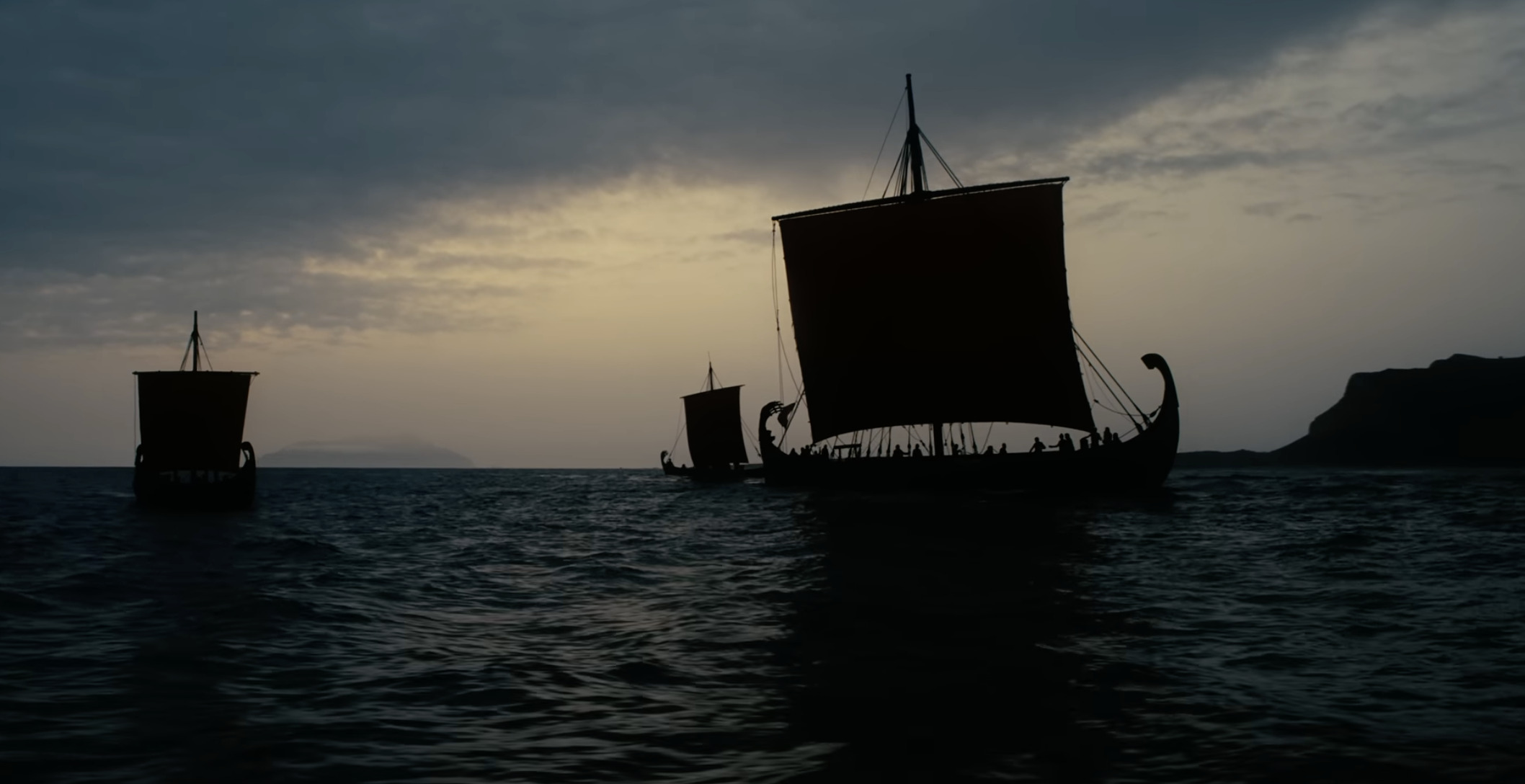
Nolan has always made this choice, to varying degrees — but The Odyssey represents his most complete commitment to the format. The shooting locations, spread across Western Sahara, Sicily's Favignana island (believed by some historians to be a site described in Homer), Scotland's Moray Firth, Iceland, Morocco, Greece and Ireland, were chosen partly for what they could provide IMAX film photography. The physical world at its most extreme — light on ancient volcanic rock, on Atlantic coastlines, on desert landscapes — is what IMAX film captures with a quality that cannot be replicated in post-production.
This is not aesthetic sentimentalism. It is a specific argument about what epic cinema is for. Nolan's position, visible throughout his career but most explicit in his public statements about The Odyssey, is that the shared experience of cinema in a theatre — specifically in a large-format theatre where the screen fills the peripheral vision — is qualitatively different from any other mode of visual storytelling. The IMAX format at its full resolution does not simply present an image. It creates an environment. The audience is not watching a landscape; they are in it.
For Homer's Odyssey, the most geographically expansive work in the Western literary tradition, this argument has particular force. The poem is about the specific physical character of the Mediterranean world — the particular quality of its light, the character of its seas, the difference between one island and another. A film that renders this in the environment of IMAX large-format is making a claim that the poem itself would recognise: that place matters, that the physical world has a specific presence, that geography is not backdrop but protagonist.
The Culture Wars Problem
Nolan's The Odyssey has been, somewhat predictably, caught up in the culture wars that now attend every major studio release. Newsweek reported in May 2026 that the film had been "swept up in culture wars" — a formulation that requires unpacking because the specific nature of the controversy is more interesting than the headline suggests.
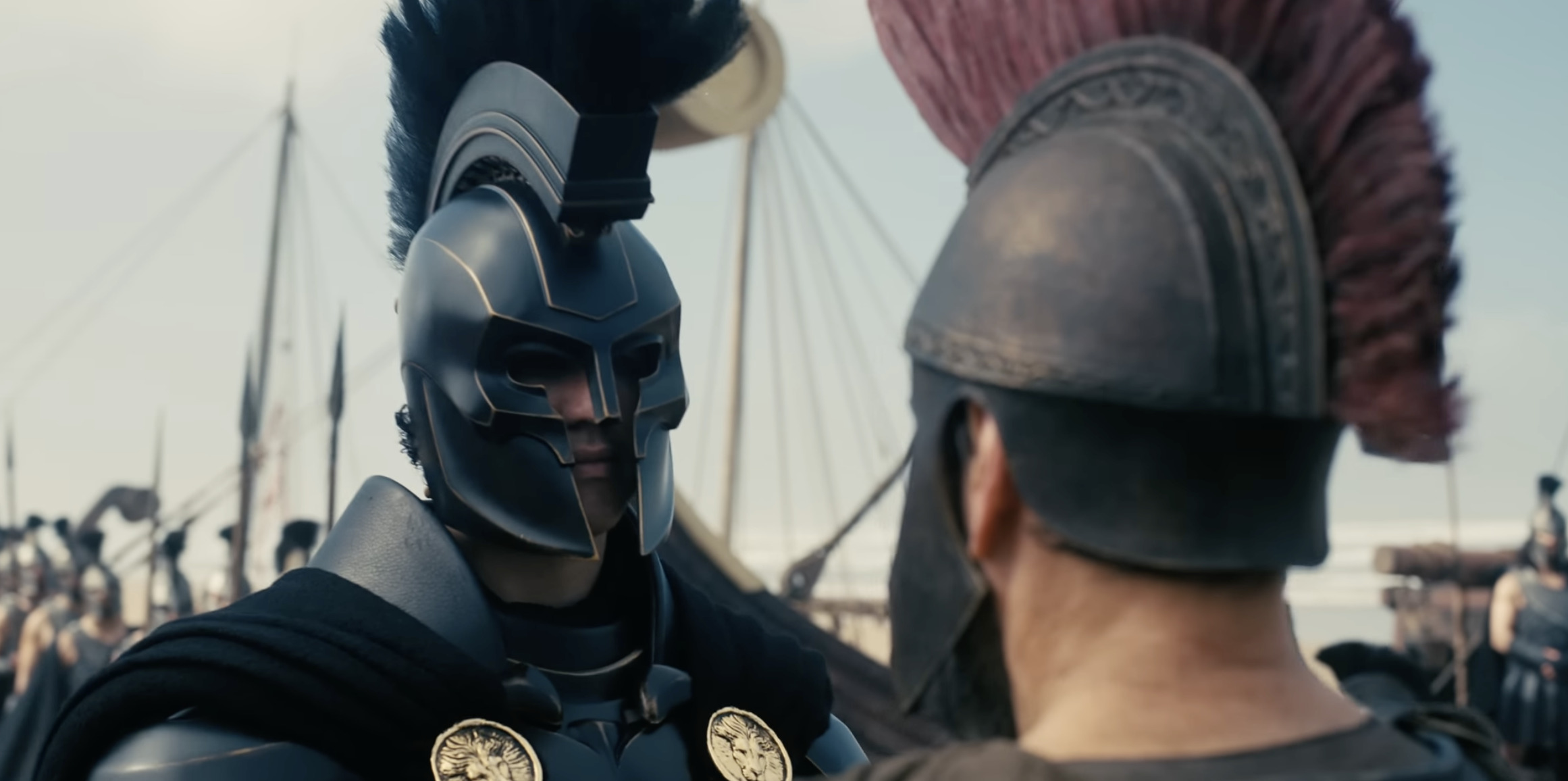
The controversy is not simply about the diversity of the cast, though that is one axis of it. It is about a more fundamental question: who has the right to tell ancient stories, and in what idiom? This question is, ironically, the exact question that Homer's tradition itself asks and answers. The oral tradition that produced The Odyssey was a living tradition — bards improvising within established frameworks, adapting the story for specific audiences, changing emphases, adding and subtracting characters. The poem that we have is not the original. There is no original. There are versions, and the tradition that produces them is fundamentally democratic about who gets to be a version-maker.
Nolan, who studied classics at Cambridge, knows this. The casting of Travis Scott as the Bard is not simply a contemporary interpolation. It is a historically accurate argument about what bardic tradition is — a tradition that has never been frozen, never been exclusive, never belonged to a single cultural moment.
The more interesting question about the film is not who is in it but whether Nolan's screenplay — his first adaptation of a work he did not originate — can navigate the fundamental structural problem of Homer's narrative: that the Odyssey is not a single story with a clean arc but a collection of episodes with a returning-home structure. Nolan's films have always been architecturally ambitious, and his ability to construct narratives that contain non-linear time is well established. Whether that skill translates to a genuinely episodic source material is the creative question that July 17 will answer.
Göransson, Again
The announcement that Ludwig Göransson would score The Odyssey — following his work on Oppenheimer, Black Panther, Tenet, and, this year, Sinners — is the clearest signal of the film's musical ambitions. Göransson is currently the most versatile and most seriously ambitious film composer working in Hollywood, with an ability to move between idiomatic specificity and abstract orchestral work that few composers possess.
For The Odyssey, the challenge is one that has occupied composers who have attempted related material for centuries: how do you render ancient Greek music without either pastiche or anachronism? The ancient Greeks had music — they described it extensively — but none of it survives. We know the scales, something about the instruments, something about the relationship between music and poetry in the oral tradition. We know almost nothing about what it sounded like.
Göransson's approach on Sinners — using the idiom of the blues as both historical documentation and mythological vehicle — suggests that he will not attempt reconstruction on The Odyssey but will instead find a contemporary analog for what ancient Greek music was doing: using sound as the carrier of cultural memory, as the substance of which myth is made. The Travis Scott casting, again, is relevant here. The Bard in Homer is not a decorative figure. He is the person who keeps the story alive through sound. If Göransson's score and Scott's performance are working together, The Odyssey may achieve something that no previous cinematic version of Homer has managed: making the act of storytelling itself part of the film's substance.
What Oppenheimer's Legacy Means for This Film
Oppenheimer grossed $952 million worldwide, won seven Academy Awards including Best Picture and Best Director, and established Nolan, definitively, as the filmmaker whose name alone can motivate audiences toward the cinema for serious adult entertainment. The commercial and critical success of Oppenheimer gave Universal the confidence to back a $250 million adaptation of Homer. That causal chain matters.
The Odyssey is the film that Oppenheimer's success made possible — not financially (Nolan has always been able to raise money) but culturally. Oppenheimer demonstrated that an audience exists, at blockbuster scale, for demanding, complex, historically situated cinema that does not condescend to its audience or simplify its material for fear of losing them. The question is whether The Odyssey's demands — which are, in some ways, greater than Oppenheimer's, because the source material is less familiar and the formal problem is harder — will produce a film that meets the standard it sets for itself.
The expectation in the critical community, watching the casting and the production information that has emerged, is cautious optimism with a specific anxiety: that the episodic structure of the source will be the hardest problem, and that the solution Nolan has found will be legible or it will not. If it is, The Odyssey will be the defining film of the summer of 2026. If it is not, it will be a magnificent, partial, interesting failure — which, given the ambition of the project, may be worth more than a smaller film's complete success.
We will know on July 17.